

 English
  русский
  Español
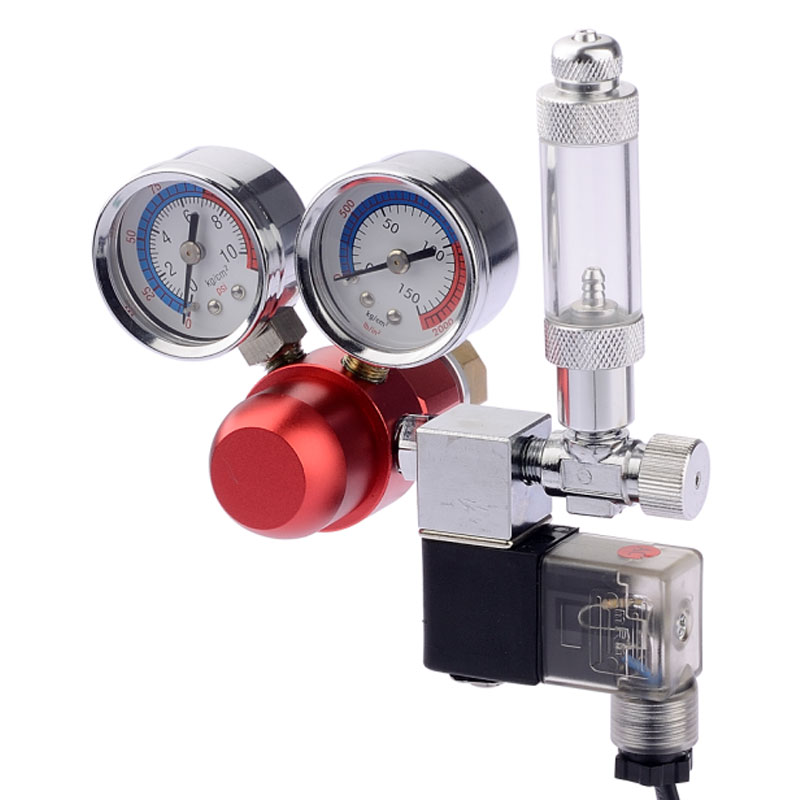
 This aquarium CO2 regulator with dual pressure gauges and single bubble counter is designed specific...
See DetailsWhat are the key differences between a CO₂ regulator and a mixed gas regulator?
Industry News-The key difference is this: a CO₂ regulator is designed for a single, stable gas at predictable pressures, while a mixed gas regulator is built to handle blended gases (typically CO₂ and nitrogen) at higher, more variable pressures. Using the wrong regulator doesn't just affect pour quality — it can lead to over-carbonation, flat beer, or in worst cases, equipment failure. Here's a precise breakdown of every meaningful difference between the two.
What Each Regulator Is Actually Doing
A CO₂ regulator reduces the pressure from a CO₂ cylinder — typically stored at 800–900 psi (55–62 bar) at room temperature — down to a working pressure of 5–30 psi (0.3–2.1 bar) suitable for pushing beer through draft lines. CO₂ is used both to carbonate beer and to push it from keg to tap.
A mixed gas regulator handles blended gas cylinders — most commonly a 75% N₂ / 25% CO₂ ("Guinness mix") or 60% N₂ / 40% CO₂ — stored at pressures up to 2,000–3,000 psi (138–207 bar). Nitrogen is nearly insoluble in beer, so the blend maintains carbonation without over-carbonating, while the higher pressure drives beer through long draw systems or nitrogen-conditioned beers like stouts.
In short: CO₂ regulators work with one gas at moderate cylinder pressures. Mixed gas regulators work with blended gases at significantly higher cylinder pressures — and are engineered accordingly.
Pressure Range: The Most Critical Engineering Difference
This is where the two regulators diverge most significantly — and where misuse causes the most damage.
| Parameter | CO₂ Regulator | Mixed Gas Regulator |
|---|---|---|
| Inlet (cylinder) pressure | Up to 1,000 psi (69 bar) | Up to 3,000 psi (207 bar) |
| Typical working (outlet) pressure | 5–30 psi (0.3–2.1 bar) | 20–60 psi (1.4–4.1 bar) |
| High-pressure gauge range | 0–1,500 psi | 0–3,000 psi or higher |
| Low-pressure gauge range | 0–60 psi | 0–100 psi |
| Body/diaphragm rating | Standard pressure rating | Reinforced for high-pressure N₂ |
Connecting a CO₂ regulator to a high-pressure nitrogen or mixed gas cylinder is a serious safety risk. The regulator body, diaphragm, and seals are not rated for 2,000–3,000 psi inlet pressure. Failures can range from gauge rupture to catastrophic regulator body failure.
Connector and Thread Standards: Why They're Different by Design
CO₂ and nitrogen cylinders use deliberately incompatible fittings — this is a safety standard enforced by the Compressed Gas Association (CGA), not an accident of manufacturing.
- CO₂ cylinders use a CGA 320 connection — a right-hand threaded fitting rated for CO₂ service up to 3,000 psi cylinder pressure.
- Nitrogen and mixed gas cylinders use a CGA 580 connection — a different thread pattern and larger diameter, physically preventing a CO₂ regulator from being connected without an adapter.
- Some mixed gas regulators include a dual-inlet design with both CGA 320 and CGA 580 ports, allowing connection to either a dedicated CO₂ cylinder or a blended gas cylinder depending on the application.
If you ever find yourself reaching for a CGA adapter to connect a CO₂ regulator to a nitrogen cylinder, stop — this is the system working as intended to prevent a dangerous mismatch.
Gas Compatibility and Internal Materials
The internal seals, diaphragms, and seat materials differ between the two regulator types to match their respective gases.
CO₂ Regulator Internals
- Diaphragms and seals are typically made from Buna-N (nitrile) rubber, which is compatible with CO₂ and resists the slight acidity of carbonic acid formed when CO₂ contacts moisture.
- Body material is usually brass — adequate for CO₂ pressure ranges and cost-effective for the application.
- CO₂ regulators also need to manage a phase-change phenomenon: liquid CO₂ in a near-empty cylinder can cause freeze-up at the regulator seat as pressure drops, temporarily blocking flow. Quality CO₂ regulators incorporate seat designs that minimize this effect.
Mixed Gas Regulator Internals
- Diaphragms are typically stainless steel or reinforced PTFE to handle higher pressures and the drier nature of nitrogen-dominated blends.
- Body material is often chrome-plated brass or stainless steel with thicker walls to handle inlet pressures up to 3,000 psi.
- Because nitrogen is stored as a compressed gas (not liquid), there is no freeze-up risk — but the higher pressure demands more robust poppet valve and seat engineering.
Single-Stage vs. Two-Stage: How This Interacts With Gas Type
Both CO₂ and mixed gas regulators are available in single-stage and two-stage configurations — but the need for two-stage regulation is more pronounced with CO₂ than with mixed gas blends.
With CO₂, cylinder pressure drops dramatically as the tank empties — from ~900 psi when full to below 100 psi in the final 20% of the tank. A single-stage CO₂ regulator will show noticeable output pressure drift during this drop, requiring manual readjustment. A two-stage CO₂ regulator reduces pressure in two steps, delivering output pressure stability within ±0.5 psi even as cylinder pressure changes — critical for maintaining consistent carbonation levels in commercial draft systems.
Mixed gas cylinders store nitrogen as a true compressed gas, so cylinder pressure drops more linearly as the tank empties. Output pressure remains more stable even with a single-stage regulator, which is why many mixed gas applications use single-stage regulators without significant performance compromise.
Application Matching: Which Regulator Belongs Where
Choosing the wrong regulator for a beverage application doesn't just cause equipment problems — it directly affects beer quality, foam behavior, and customer experience.
| Application | Recommended Regulator | Typical Serving Pressure | Why |
|---|---|---|---|
| Standard lager / ale (short draw) | CO₂ single-stage | 10–14 psi | Low line resistance, CO₂ maintains carbonation |
| Commercial multi-keg draft system | CO₂ two-stage | 12–16 psi | Pressure stability across tank life essential |
| Stout / nitro beer (e.g., Guinness) | Mixed gas (75/25 N₂/CO₂) | 30–40 psi | N₂ creates creamy texture without over-carbonating |
| Long draw system (>25 ft lines) | Mixed gas or high-pressure CO₂ | 25–45 psi | Compensates for line resistance without CO₂ over-absorption |
| Cold brew / still beverages | Mixed gas (pure N₂ or high N₂ blend) | 20–30 psi | N₂ pushes product without adding carbonation |
| Home kegerator | CO₂ single-stage | 10–12 psi | Simple, cost-effective, adequate for short draw |
Cost and Maintenance Differences
Mixed gas regulators cost 20–50% more than equivalent CO₂ regulators due to their heavier-duty construction, higher-rated gauges, and reinforced internals. Entry-level CO₂ single-stage regulators start around $40–$80, while quality two-stage CO₂ regulators run $100–$200. Mixed gas regulators typically range from $120–$300+ for commercial-grade units.
Maintenance Intervals
- CO₂ regulators should have seals and diaphragms inspected every 12–18 months. CO₂'s mild acidity can degrade nitrile seals over time, causing slow leaks at the inlet connection.
- Mixed gas regulators are generally more durable due to their reinforced internals, but high-pressure inlet connections should be leak-tested with soapy water every 6 months given the much higher working pressures involved.
- Both types should be recalibrated annually in commercial settings — pressure gauge drift of even ±2 psi can noticeably affect carbonation levels and pour quality in a high-volume bar environment.
The One-Line Decision Rule
If you're serving carbonated beer from a standard keg over a short line, a CO₂ regulator is the correct and cost-effective choice. If you're serving nitro beers, still beverages, long-draw systems, or any application requiring higher push pressure without increasing carbonation, a mixed gas regulator is not optional — it's the only way to maintain product quality and equipment safety. The gas blend drives the regulator choice, not the other way around.
Related products
-
-
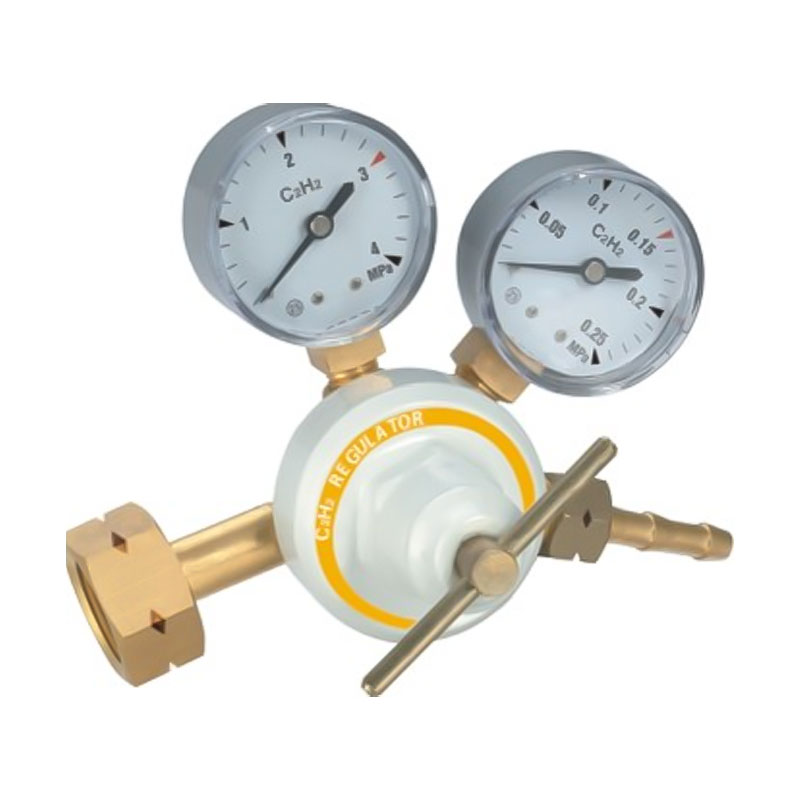
The AR-56 High-Stability Welding and Cutting Acetylene Regulator is designed with a focus on pressur...
See Details -
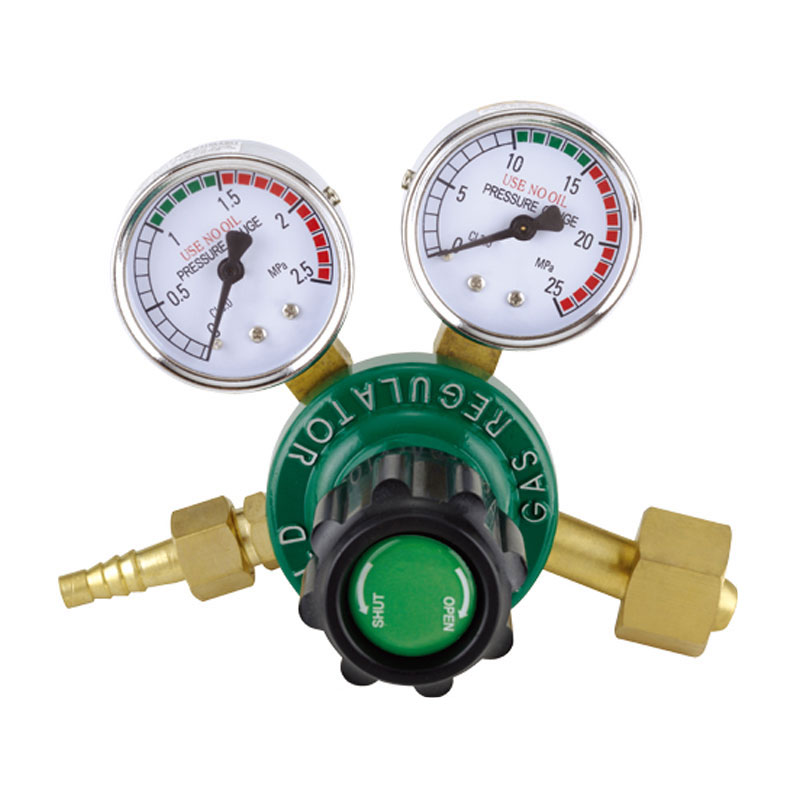
The OR-09 Customizable Pressure and Interface Oxygen Pressure Reducing Controller is designed for pr...
See Details -
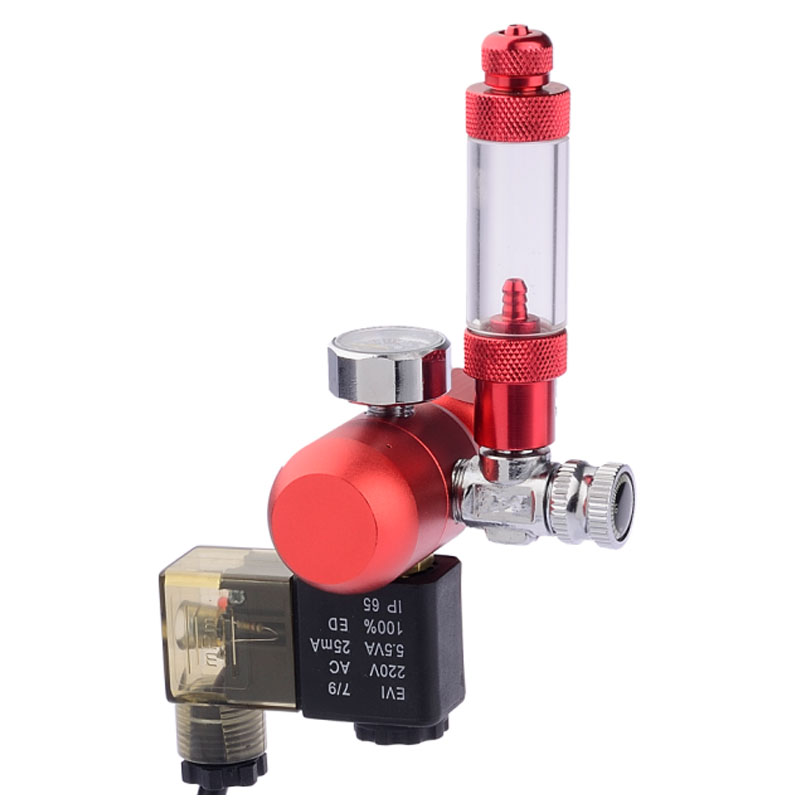
Aquarium CO2 Regulator's precision adjustment design provides accurate CO2 volume at LP 150 PSI / HP...
See Details -
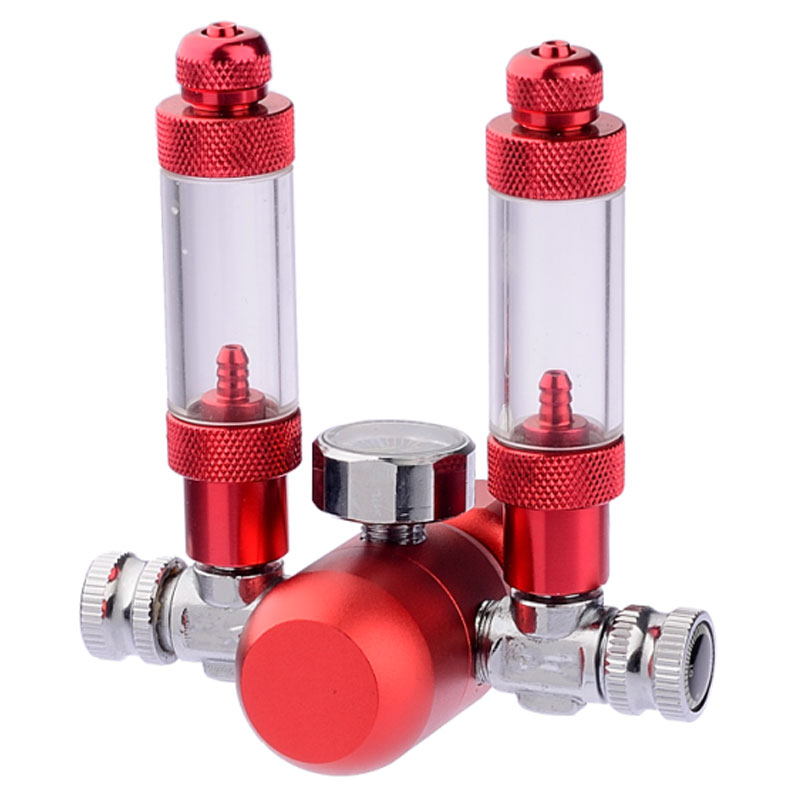
This environmentally friendly dual-gauge CO2 aquarium pressure regulator is designed for aquatic pla...
See Details -
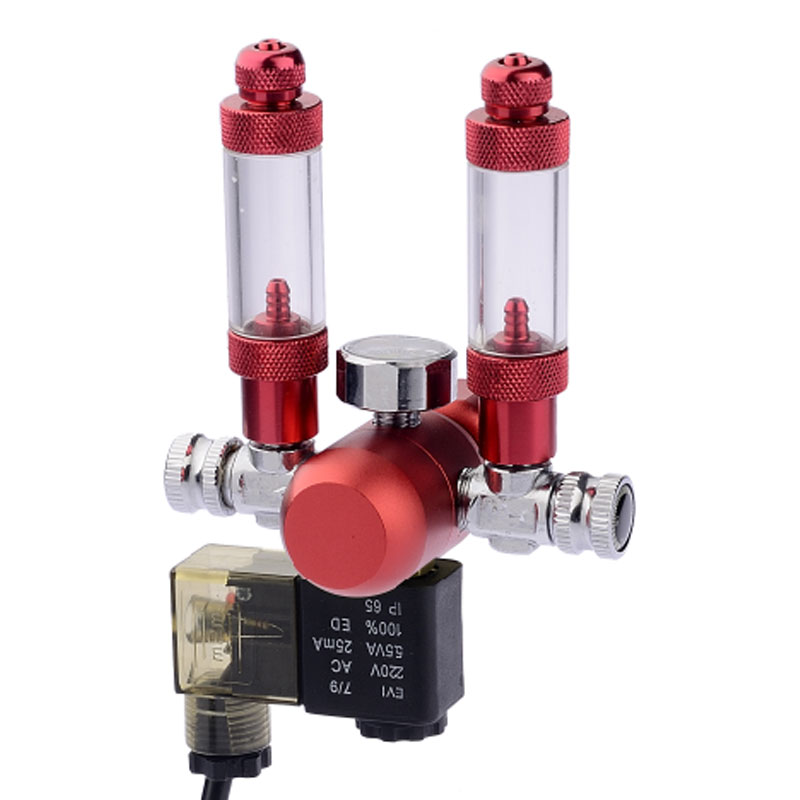
This aquarium CO2 regulator with dual bubble counters is designed for aquascaping and aquatic plant ...
See Details -
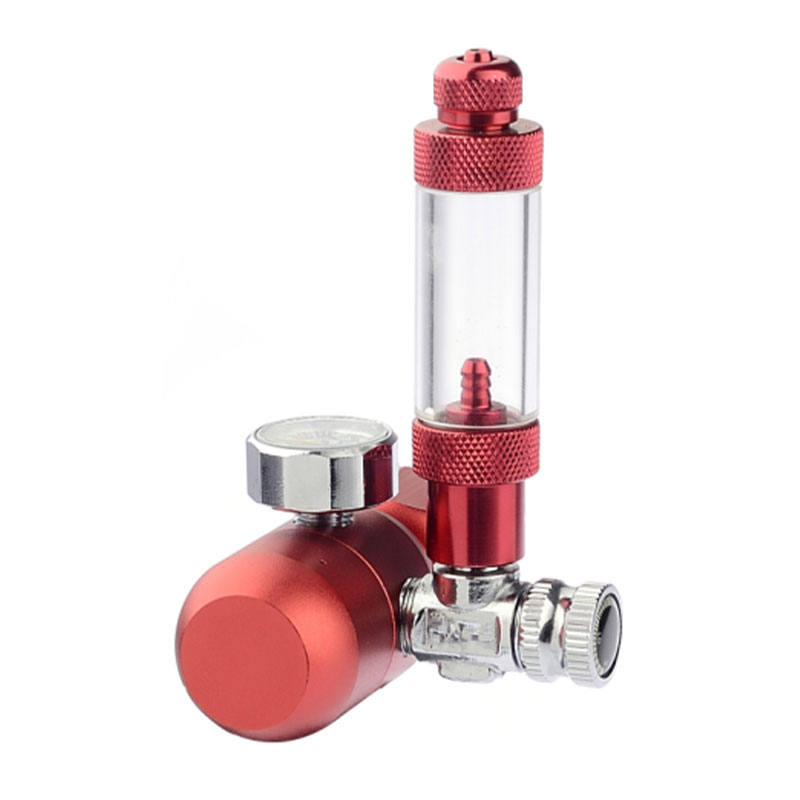
This aquarium plant CO2 pressure regulator is designed for aquatic plant landscaping and aquarium sy...
See Details -
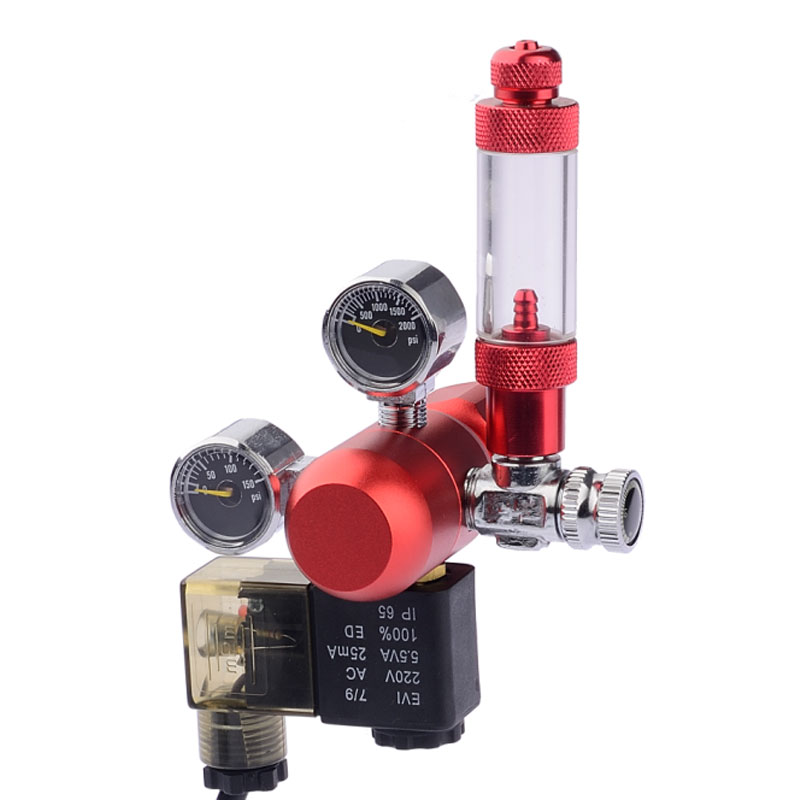
This aquarium CO2 regulator with solenoid valve and dual bubble counter is designed to provide a mor...
See Details

- PRODUCTS
- Pressure Regulator for Welding and Cutting
- Aquarium Pressure Regulator
- Beer and Beverage Pressure Regulator
- Pipeline Pressure Reducer
- CONTACT INFO
-
-
+86-180 6927 8236

-
[email protected]

-
No.1358,Tanjialing West Road, Lanjiang Street,Yuyao, 315400, Zhejiang

-
- MOBILE QR CODE

