

 English
  русский
  Español
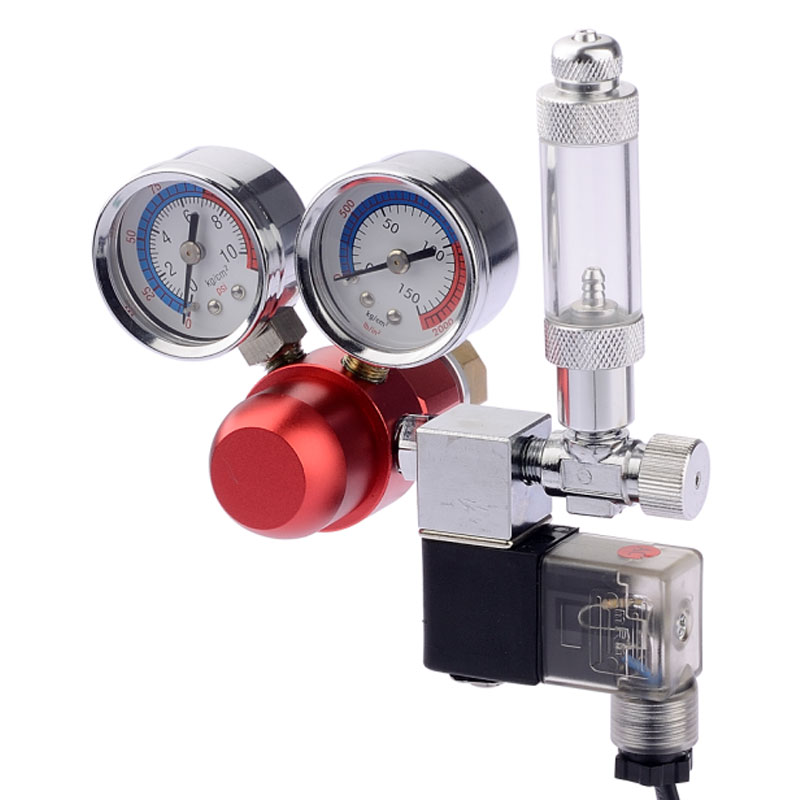
 This aquarium CO2 regulator with dual pressure gauges and single bubble counter is designed specific...
See DetailsHow to Choose Between a Single-Stage and a Dual-Stage Aquarium Pressure Regulator?
Industry News-How to Choose Between a Single-Stage and a Dual-Stage Aquarium Pressure Regulator?
The decision between a single-stage and a dual-stage aquarium pressure regulator is often framed as a choice between budget and safety. In a CO2 system, the regulator’s primary job is to take the high-pressure gas from the cylinder—which can be stored at pressures exceeding $800$ PSI ($55$ bar)—and reduce it to a manageable “working pressure” of around $30$ to $50$ PSI. While both types of regulators achieve this goal, the internal physics of how they manage that reduction determines the long-term stability of your aquarium’s ecosystem.
The Mechanics of the Single-Stage Regulator
A single-stage regulator reduces the cylinder pressure to the output pressure in one single motion. Inside the regulator body, a spring-loaded diaphragm moves against the high-pressure gas coming from the tank. As the user adjusts the knob, they are increasing or decreasing the tension on that spring. Because there is only one chamber for this reduction, the device is highly sensitive to the pressure inside the CO2 cylinder.
The primary drawback of this design is a phenomenon known as “End-of-Tank Dump.” As the liquid CO2 in your cylinder is nearly exhausted, the pressure inside the tank begins to drop. Paradoxically, this drop in input pressure causes the internal spring to push the diaphragm open further, leading to a sudden, massive spike in the output gas flow. In an aquarium, this results in a lethal surge of CO2, which can cause a rapid pH crash and suffocate fish and shrimp within minutes. For this reason, single-stage regulators require diligent monitoring as the gas supply runs low.
The Superiority of Dual-Stage Architecture
A dual-stage regulator is essentially two separate regulators built into a single housing. The first stage reduces the high pressure from the cylinder to a fixed intermediate pressure (usually between $100$ and $150$ PSI). This intermediate gas then flows into the second stage, which reduces it further to the user-defined working pressure.
The brilliance of this design lies in its stability. Because the second stage is always receiving a constant intermediate pressure from the first stage, it is completely unaffected by the fluctuating pressure inside the CO2 cylinder. Even when the cylinder is nearly empty and the input pressure is dropping, the dual-stage regulator maintains a perfectly steady output. This eliminates the risk of an end-of-tank dump, providing “set-and-forget” peace of mind for the aquarist.
Technical Comparison: Stability, Safety, and Performance
When evaluating these two systems, it is important to look at how they impact the chemistry of your water. Carbon dioxide is not just a plant nutrient; it is a powerful acidifier. If your CO2 flow is inconsistent, your pH levels will swing, creating a stressful environment for livestock and encouraging the growth of opportunistic algae like Black Brush Algae (BBA).
Precision and Needle Valve Quality
The regulator is only the first half of the equation; the second half is the Needle Valve. High-precision dual-stage regulators are almost always paired with high-quality needle valves that allow for “micro-adjustments.” In a dual-stage system, the needle valve works more effectively because the pressure behind it is rock-solid.
In a single-stage setup, users often find themselves constantly “tweaking” the needle valve to maintain a consistent bubble count. This is because small changes in ambient room temperature can affect the pressure of the CO2 gas inside the cylinder, which in turn affects the single-stage output. For a high-tech aquascape where $30$ ppm (parts per million) of CO2 is the target, this lack of precision can lead to dangerous fluctuations.
Comparative Overview: Single-Stage vs. Dual-Stage
| Feature | Single-Stage Regulator | Dual-Stage Regulator |
|---|---|---|
| Reduction Steps | 1 Stage | 2 Stages |
| End-of-Tank Dump Risk | High | Zero |
| Output Pressure Stability | Fluctuates with tank pressure | Completely Stable |
| Typical Cost (USD) | $$40 \text{–} $90$ | $$150 \text{–} $350$ |
| Diaphragm Durability | Moderate | High (Dual protection) |
| Maintenance Level | High (Periodic adjustment) | Low (Set-and-forget) |
| Ideal Application | Low-tech / Budget setups | High-tech / Professional scapes |
Strategic Selection: When to Invest in High-End Gear
Choosing between these regulators involves assessing the “Real Cost” of a failure. If you are maintaining a $10$-gallon tank with common guppies and java fern, a single-stage regulator might be a justifiable risk. However, for serious aquascapers, the regulator is an insurance policy for their living art.
Protecting Your Bio-Investment
Consider the value of the livestock and plants in your tank. A colony of rare Caridina shrimp or a school of high-grade Discus can cost hundreds, if not thousands, of dollars. An end-of-tank dump from a cheap regulator can wipe out that entire investment in a single afternoon. When viewed from this perspective, the $$100$ price difference between a single-stage and a dual-stage regulator is a small price to pay for a lifetime of safety.
Furthermore, high-end dual-stage regulators are built to last. They often feature stainless steel diaphragms rather than rubber ones, which can degrade over time when exposed to the acidic nature of CO2. Investing in a professional-grade dual-stage unit is often a one-time purchase that will serve you across multiple tank upgrades.
The Importance of the Solenoid Valve
Regardless of the stage type, the Solenoid Valve is the heart of automation. Modern aquarium pressure regulators usually come with a DC solenoid. Unlike older AC solenoids, DC versions run cooler, consume less power, and are virtually silent. This component allows you to sync your CO2 with your lights using a standard timer. By turning the CO2 on two hours before the lights go on and off one hour before they turn off, you ensure that the gas is only present when the plants are actively photosynthesizing, further increasing the efficiency and safety of your system.
FAQ: Aquarium Pressure Regulator Troubleshooting
Why does my regulator show high pressure on the output gauge when the solenoid is closed?
This is known as “Pressure Creep.” It can happen if the internal seals of the regulator are dirty or worn. While a small amount of creep is normal when the gas flow is suddenly stopped, significant creep can be dangerous. If you notice the needle climbing steadily when the solenoid is off, it may be time to service or replace the regulator.
Can I use a beverage or industrial CO2 regulator for my aquarium?
Yes, but with caution. Most industrial regulators are designed for high flow rates (like soda fountains) and lack the precision needle valve required for the low-flow needs of an aquarium (measured in bubbles per second). If you use an industrial regulator, you will likely need to add a high-precision needle valve to the output to make it usable.
What is the difference between CGA320 and DIN477?
These are the standard thread types for CO2 cylinders. CGA320 is the standard in North America, while DIN477 (or W21.8) is the standard in Europe and parts of Asia. Ensure your aquarium pressure regulator matches the valve on your CO2 cylinder, or you will need an adapter.
Why is my bubble counter leaking water into the regulator?
This happens due to back-pressure when the solenoid turns off. To prevent this, you must install a high-quality Check Valve between the bubble counter and the regulator. This ensures that water and gas can only flow toward the tank and never backward into the sensitive internal components of the regulator.
How often should I check my CO2 regulator for leaks?
It is best practice to perform a “Soapy Water Test” every time you swap out your CO2 cylinder. Simply spray a mixture of dish soap and water on all connection points (cylinder to regulator, regulator to solenoid, etc.). If you see bubbles forming, you have a leak that needs to be tightened.
Related products
-
-
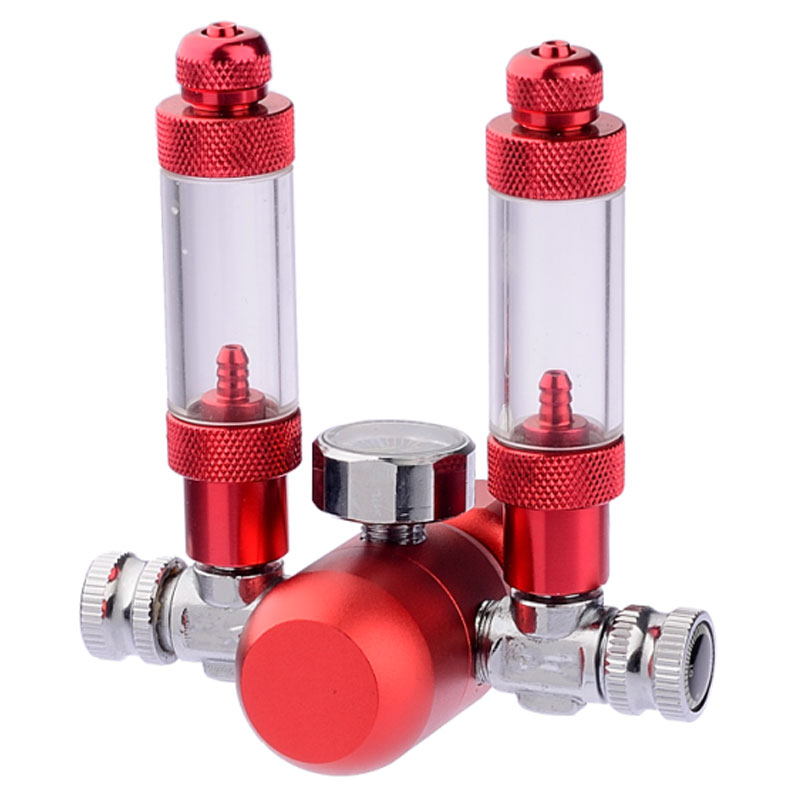
This environmentally friendly dual-gauge CO2 aquarium pressure regulator is designed for aquatic pla...
See Details -
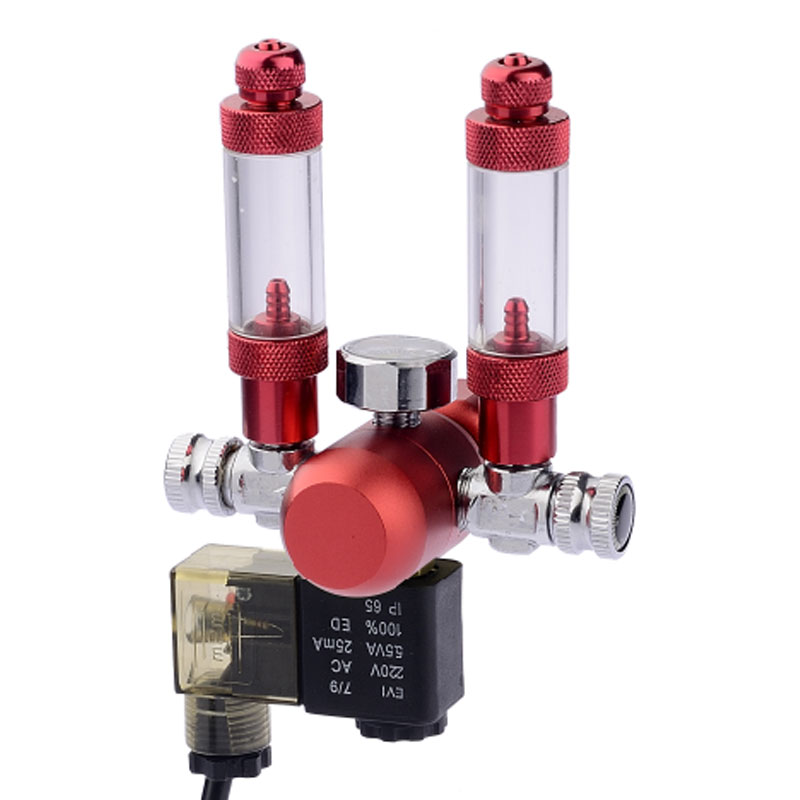
This aquarium CO2 regulator with dual bubble counters is designed for aquascaping and aquatic plant ...
See Details -
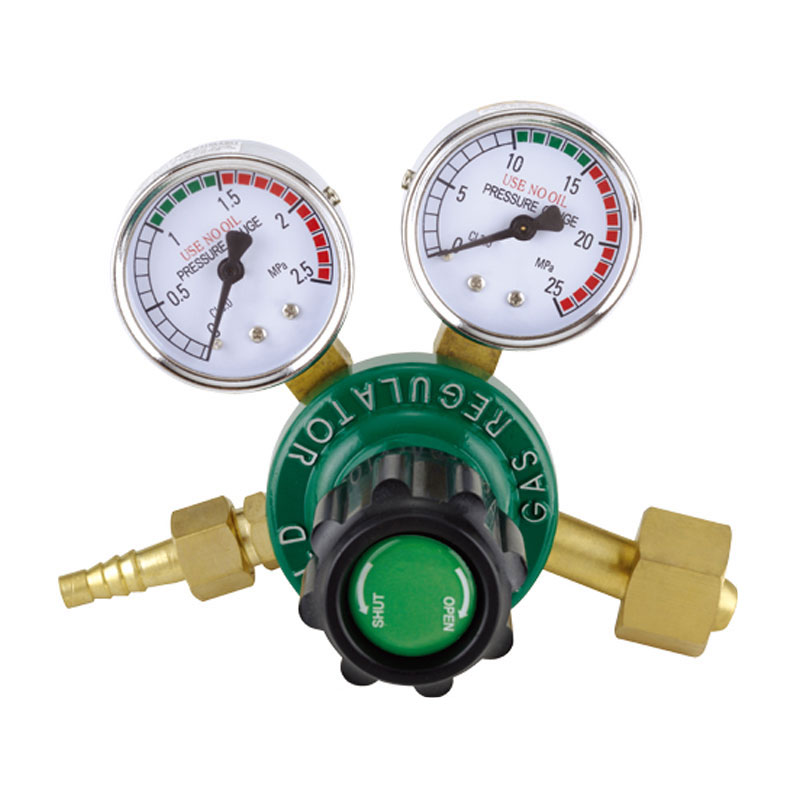
The OR-09 Customizable Pressure and Interface Oxygen Pressure Reducing Controller is designed for pr...
See Details -
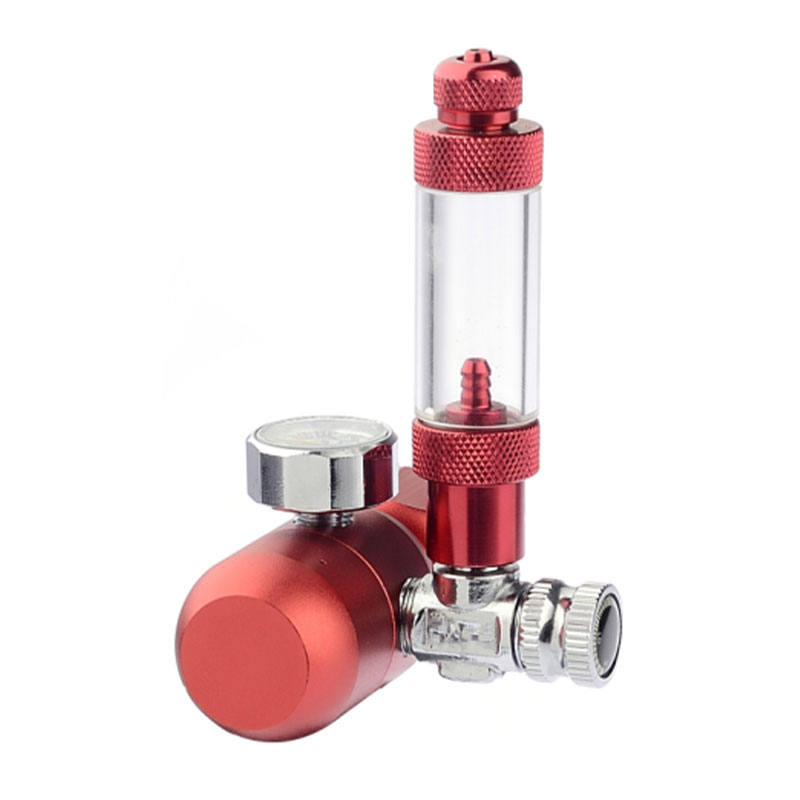
This aquarium plant CO2 pressure regulator is designed for aquatic plant landscaping and aquarium sy...
See Details -
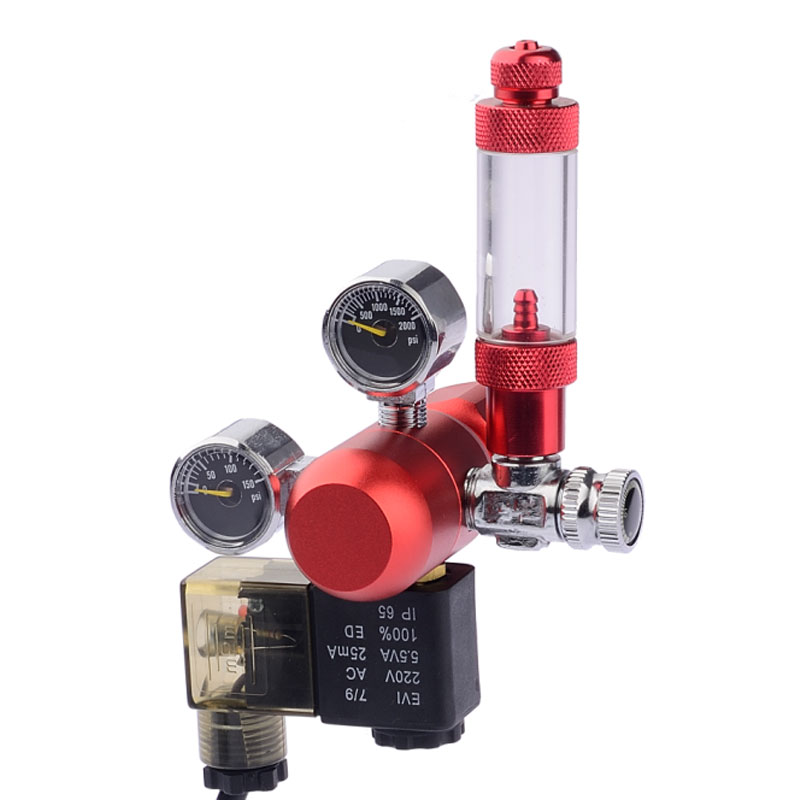
This aquarium CO2 regulator with solenoid valve and dual bubble counter is designed to provide a mor...
See Details -
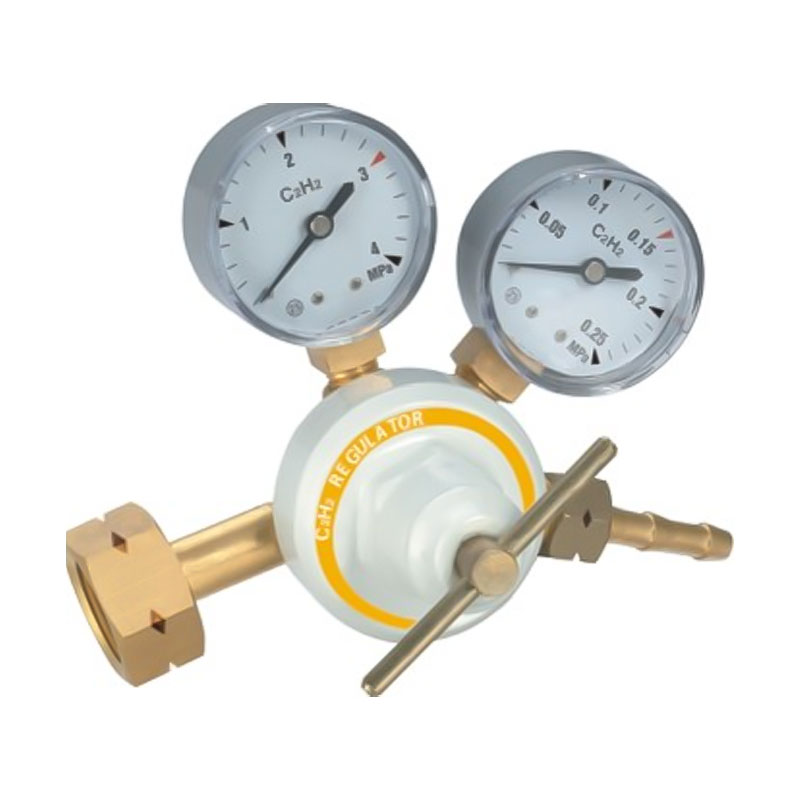
The AR-56 High-Stability Welding and Cutting Acetylene Regulator is designed with a focus on pressur...
See Details -
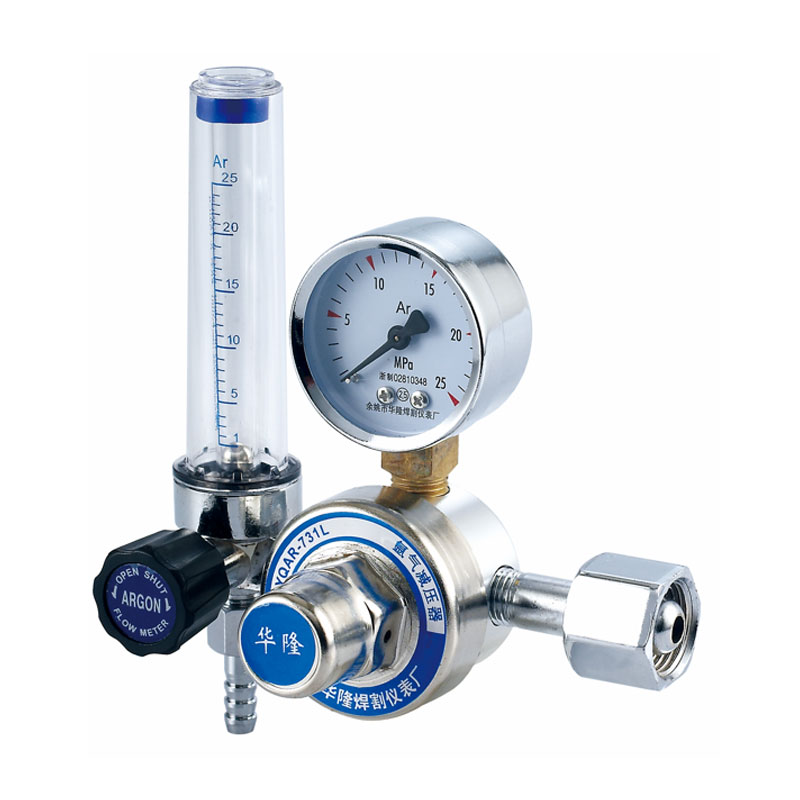
The ArR-01 High-Pressure Argon Cylinder Regulator is a pressure regulation device designed for appli...
See Details

- PRODUCTS
- Pressure Regulator for Welding and Cutting
- Aquarium Pressure Regulator
- Beer and Beverage Pressure Regulator
- Pipeline Pressure Reducer
- CONTACT INFO
-
-
+86-180 6927 8236

-
[email protected]

-
No.1358,Tanjialing West Road, Lanjiang Street,Yuyao, 315400, Zhejiang

-
- MOBILE QR CODE

