

 English
 русский
 Español
The AR-59 Precision Acetylene Pressure Regulator is a professional device designed for industrial we...
See DetailsAcetylene Torch Regulator Settings: Working Pressure Guide for Safe Cutting
Industry News-Ask five welders how they set an acetylene regulator and you will get five slightly different answers, yet the safe window is narrower than most people expect. Acetylene is a fuel gas that becomes unstable when it is compressed too hard, so the delivery side of an acetylene regulator is deliberately kept low. In practice that means never setting the working pressure above 15 psi (1 bar), whatever size of torch you are running.
Everything else in the setup follows from that one rule. Below we look at what each gauge is really telling you, the working pressures that suit common cutting tips, the correct order of operations at start-up, and the small habits that keep a flame steady all afternoon. These are the notes we share with customers every week at Yuyao Hualong Welding Meter Factory, where we have been building pressure regulators since 2007.
What the Two Gauges on an Acetylene Regulator Tell You
A standard acetylene regulator carries two gauges. The gauge on the cylinder side reads the full pressure inside the bottle. On a freshly filled acetylene cylinder this usually sits somewhere around 250 psi (about 17 bar), and it drops steadily as gas is drawn off.
The outlet gauge is the working gauge, and it is normally scaled to 0 to 30 psi (0 to 2 bar) so that small adjustments are easy to read. This is the number you actually set. On most regulators a large T-handle or knurled screw controls it: turning clockwise raises delivery pressure, turning counter-clockwise lowers it. Between the two gauges sits the seat and diaphragm assembly that does the actual work, holding the outlet steady while the cylinder pressure behind it slowly falls.
Why acetylene behaves differently from oxygen
Acetylene cylinders are not simply filled with free gas. The gas is dissolved in acetone held inside a porous mass, which has two practical consequences. First, cylinder pressure is not a reliable indicator of how much gas is left. Second, the gas should never be drawn off faster than roughly one seventh of the cylinder contents per hour, otherwise acetone is carried out with the gas and ends up in the hose, the regulator and the torch.
Acetylene connections also use left-hand threads, and the fuel hose is red in most standards while oxygen is green or black. Thread direction prevents most accidental cross-connections, but the hose still has to match the service. A regulator that was built for oxygen should never be moved to the acetylene side of the cart.
Typical Working Pressures for Common Cutting Tips
The table below gives starting points for a standard hand cutting torch fitted with a two-piece cutting tip. Oxygen pressure here refers to the cutting oxygen stream, which is set with the same regulator and then trimmed at the torch lever.
| Cutting tip size | Steel thickness | Acetylene working pressure | Oxygen working pressure |
|---|---|---|---|
| 0 | up to 3 mm (1/8 in) | 3 psi (0.2 bar) | 20 to 25 psi (1.4 to 1.7 bar) |
| 1 | 3 to 6 mm (1/8 to 1/4 in) | 3 to 5 psi | 25 to 30 psi |
| 2 | 6 to 12 mm (1/4 to 1/2 in) | 4 to 6 psi | 30 to 35 psi |
| 3 | 12 to 19 mm (1/2 to 3/4 in) | 5 to 8 psi | 35 to 40 psi |
| 4 | 19 to 32 mm (3/4 to 1-1/4 in) | 8 to 10 psi | 40 to 45 psi |
| 5 and above | over 32 mm | 10 to 12 psi | 45 to 55 psi |
For gas welding rather than cutting, both sides are set much lower, usually 3 to 5 psi of acetylene and a similar oxygen pressure depending on tip size and plate thickness. The 15 psi ceiling on the acetylene side still applies, and it is worth remembering that a big cutting tip needs more oxygen, not more acetylene.
Setting an Acetylene Regulator, Step by Step
The order of operations matters as much as the numbers. Work through the sequence below and the regulator will rarely give you trouble.
- Check the equipment first: hoses free of cracks and burns, flashback arrestors fitted at the regulator outlets, correct tip for the job, and a spark lighter within reach.
- Turn both regulator adjusting screws counter-clockwise until they spin freely. A regulator that is already wound in will slam full pressure into the hose the moment the cylinder valve cracks open.
- Stand to one side and crack the acetylene cylinder valve briefly to blow out any dust, then close it again.
- Fit the regulator and tighten the union nut with a wrench. Acetylene fittings are left-hand thread, so the nut tightens counter-clockwise. Firm is enough; do not force it.
- Open the acetylene cylinder valve slowly, no more than one and a half turns, so it can be shut off quickly in an emergency. Watch the high-pressure gauge settle.
- Turn the acetylene adjusting screw clockwise, slowly, until the delivery gauge reaches the figure for your tip. For most cutting work this sits between 3 and 10 psi, and it must never pass 15 psi.
- Open the oxygen cylinder valve fully, then set the oxygen delivery pressure the same way.
- Purge each hose separately for a second or two before fitting the torch, so that any mixed gas is cleared.
- Light the acetylene first, add oxygen gradually, and balance the flame before you start the cut.
- When the job is finished, close the torch valves, then the cylinder valves, then open the torch valves to bleed the lines. Finally back both adjusting screws off so the diaphragms rest.
Reading the Flame Once the Gauges Are Set
Gauges get you close; the flame tells you whether the setting is right. A correctly set acetylene regulator produces a steady flame that does not waver or hiss, with a clean inner cone you can bring down to the metal. If the flame keeps drifting or the cut edge starts to drag, the answer is usually a small delivery adjustment rather than a large one.
The creeping pressure problem
A regulator that slowly builds delivery pressure with the torch valve closed has a leaking seat or a dirty valve. This creeping is not a setting issue and cannot be tuned out at the handle. Stop using the regulator and have it serviced. The same goes for a regulator whose diaphragm has stiffened with age and no longer holds a steady outlet.
It also helps to re-check the acetylene reading about halfway through a long cut. As the cylinder empties, cylinder pressure falls and the outlet can drift slightly on a single-stage unit. A quick touch on the adjusting screw restores it.
Mistakes That Cause Most Setting Problems
- Setting acetylene above 15 psi. There is no job that requires it, and the risk is real.
- Leaving the adjusting screw wound in before opening the cylinder valve, which shocks the diaphragm and hose.
- Judging the job by the gauge alone and ignoring a flame that is clearly oxidizing or carburizing.
- Drawing gas faster than about one seventh of the cylinder contents per hour.
- Mixing hoses between fuel gas and oxygen, or moving a regulator from one gas service to another.
- Over-tightening the union nut and damaging the seat, which then leaks no matter how carefully you set the pressure.
- Keeping a regulator in service long after it starts creeping or reading erratically.
Choosing a Regulator That Holds Its Setting
Once you know the pressures you need, the next question is which regulator will hold them through a full shift. Single-stage regulators are compact and quick to set, while two-stage models cost more but keep the outlet rock steady as the cylinder empties. If you are still weighing up the options, our note on how to choose the right acetylene pressure regulator goes through the differences in more detail.
For everyday cutting and welding in a workshop, a high-precision acetylene regulator with a clean, readable delivery gauge makes the daily setting routine much less fiddly. Precision here is not a marketing word; it means the outlet stays where you put it when the torch is opened and closed repeatedly.
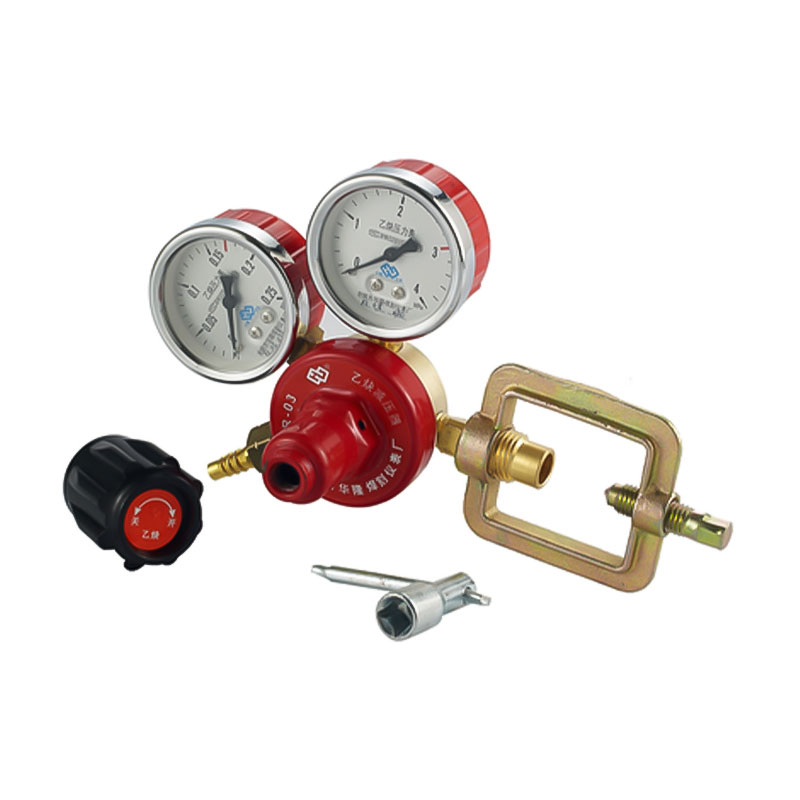 AR-03 High Precision Acetylene Regulator for Workshop Cutting and WeldingA stable acetylene regulator for everyday workshop cutting and welding, with adjustable output and a readable gauge for repeated torch settings.View Product →
If your work happens outdoors or in a fabrication yard, an all-brass body is worth the small extra cost. Brass resists the knocks, moisture and temperature swings that shorten the life of a painted or plated housing, and it will not flake or rust into the gas path.
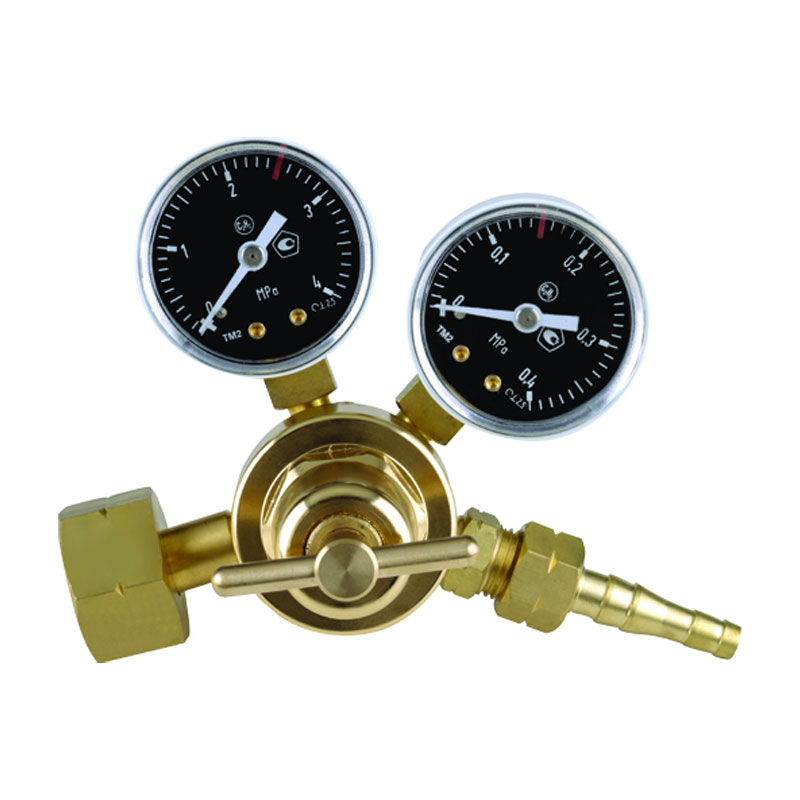 AR-57 All Brass Acetylene Regulator for Heavy-Duty Industrial WeldingA heavy-duty industrial regulator with an all-brass body, suited to high-intensity welding and cutting where moisture, knocks, and continuous use demand durability.View Product →
Heavy plate cutting and long production runs put a different demand on the regulator. A large-flow industrial model keeps the delivery stable while you are cutting continuously, so the flame stays the same from the first cut of the morning to the last.
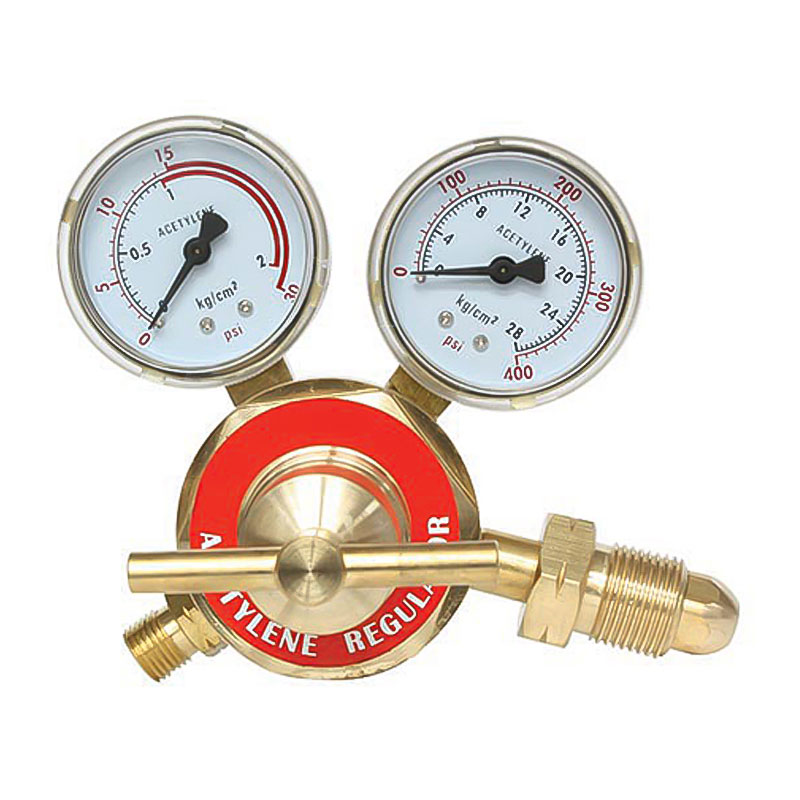 AR-66 Large Flow Industrial Acetylene Regulator for Continuous CuttingA large-flow industrial regulator for long production runs, helping keep delivery stable through continuous cutting when matched to gas, tip, and duty cycle.View Product →
Whichever style suits your bench, keep in mind that the settings only stay reliable when the regulator is matched to the gas, the tip and the duty cycle.
Regulator settings are one of those skills that feel complicated until the logic clicks: keep the acetylene side low, set the oxygen to match the tip, work through start-up in the right order, and let the flame confirm what you have done. If you would like to compare models or talk through the pressures for a specific torch and material, take a look through our range of acetylene pressure regulators or send us the details of your setup. After almost two decades of building these instruments, we are always happy to talk through the practical side of pressure control.
Related products
-
-
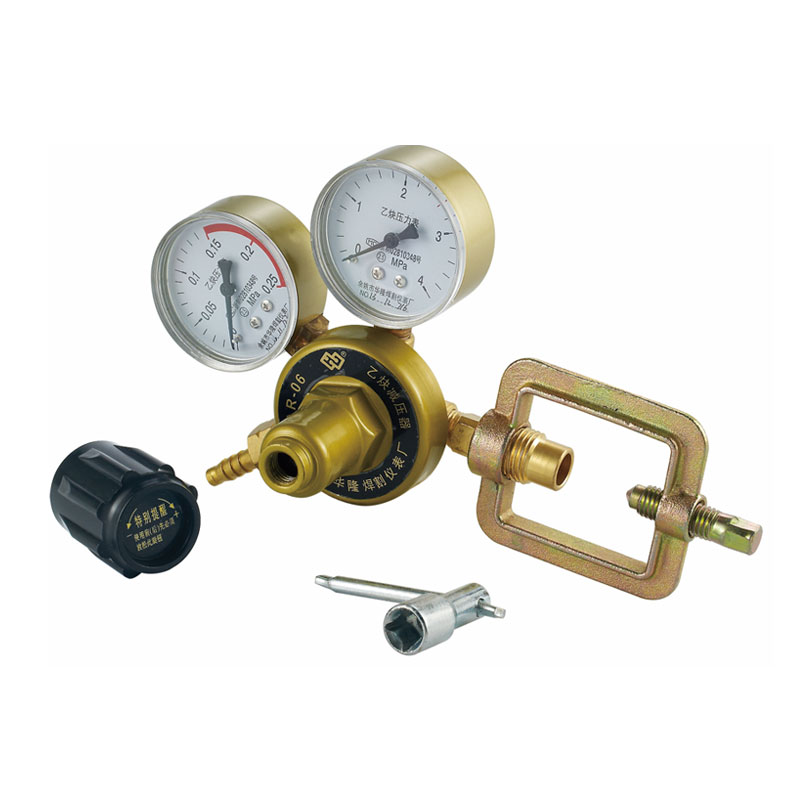
AR-06 High-Performance Acetylene Regulator is designed as a pressure control device for industrial w...
See Details -
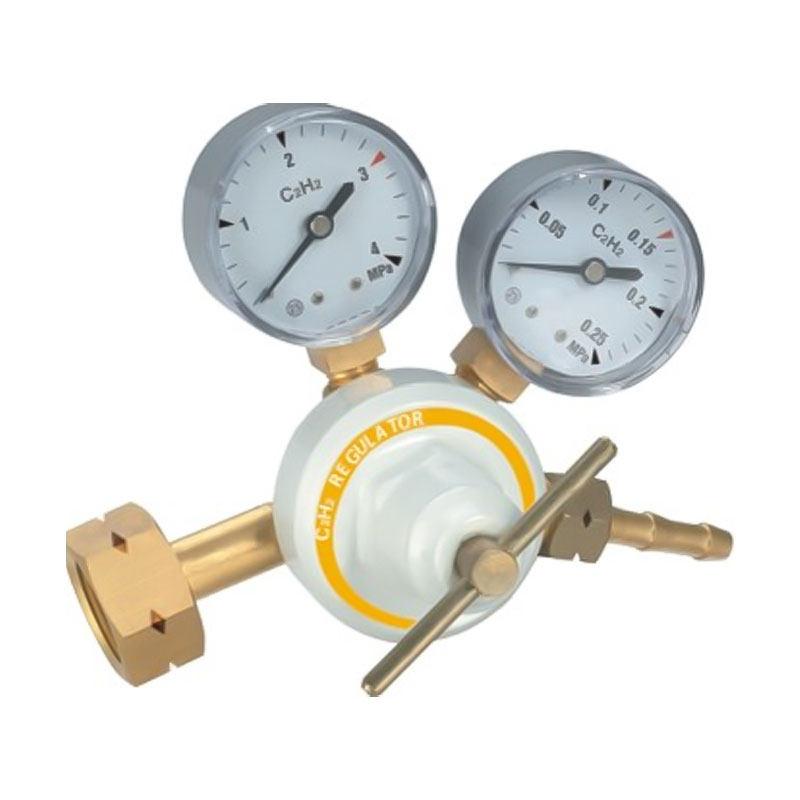
The AR-56 High-Stability Welding and Cutting Acetylene Regulator is designed with a focus on pressur...
See Details -
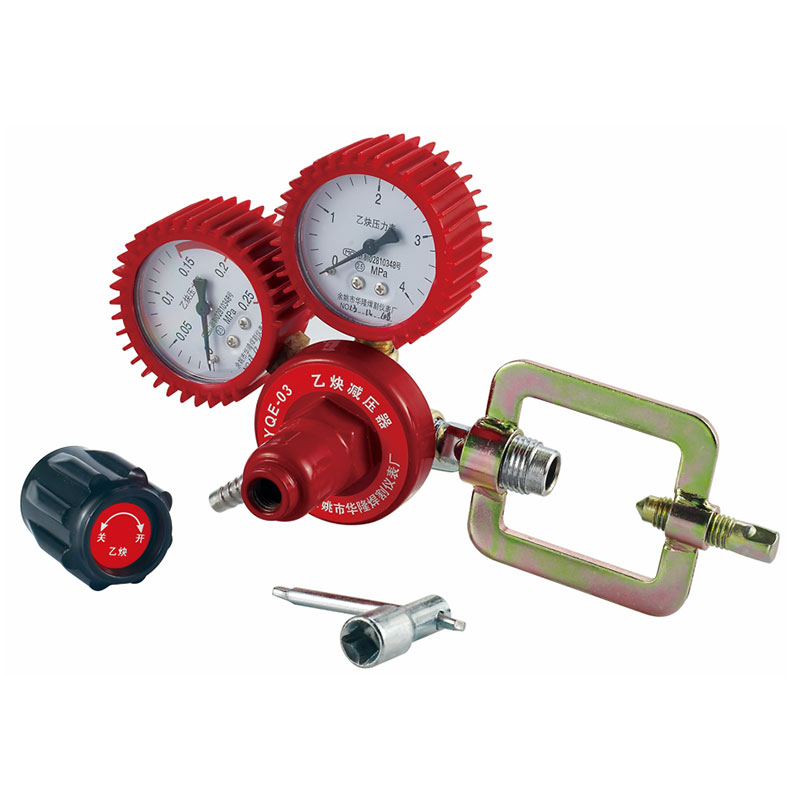
The AR-02 Acetylene Gas Regulator is a pressure control device designed for use with acetylene gas, ...
See Details -
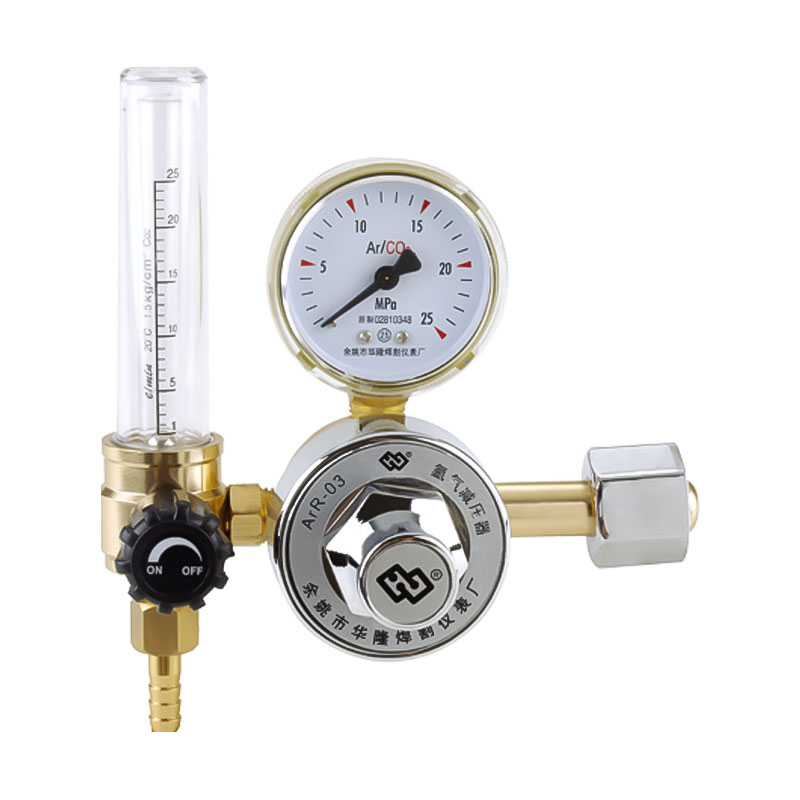
The ArR-02 Industrial Constant-Pressure Argon Regulator is a pressure management device designed for...
See Details -

The AR-03 High Precision Acetylene Regulator is a device designed for regulating acetylene gas press...
See Details -
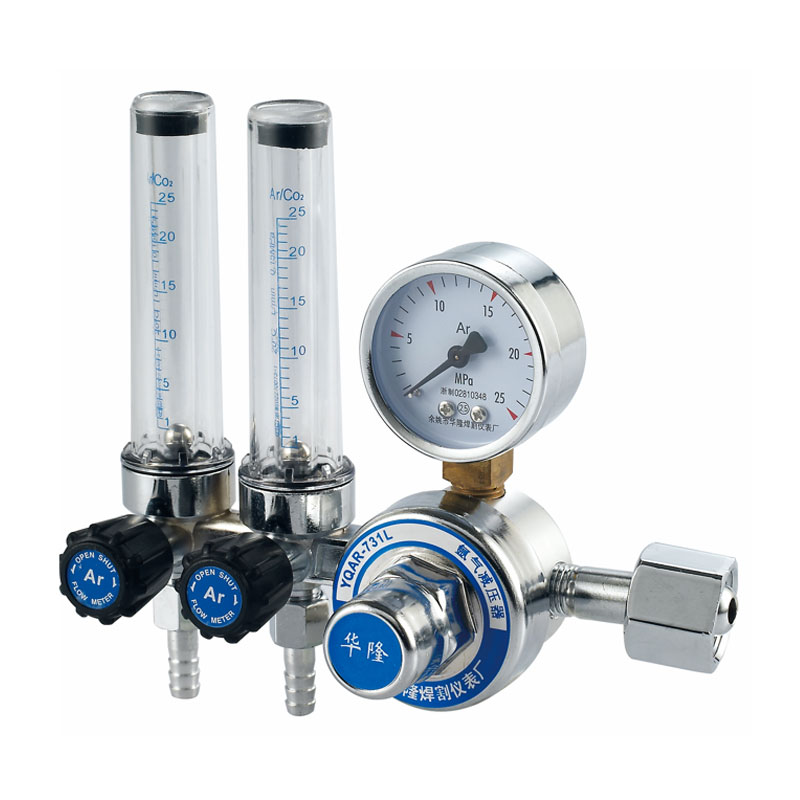
The ArR-01-2 High-Performance Argon Regulator is a pressure management device designed for precision...
See Details -
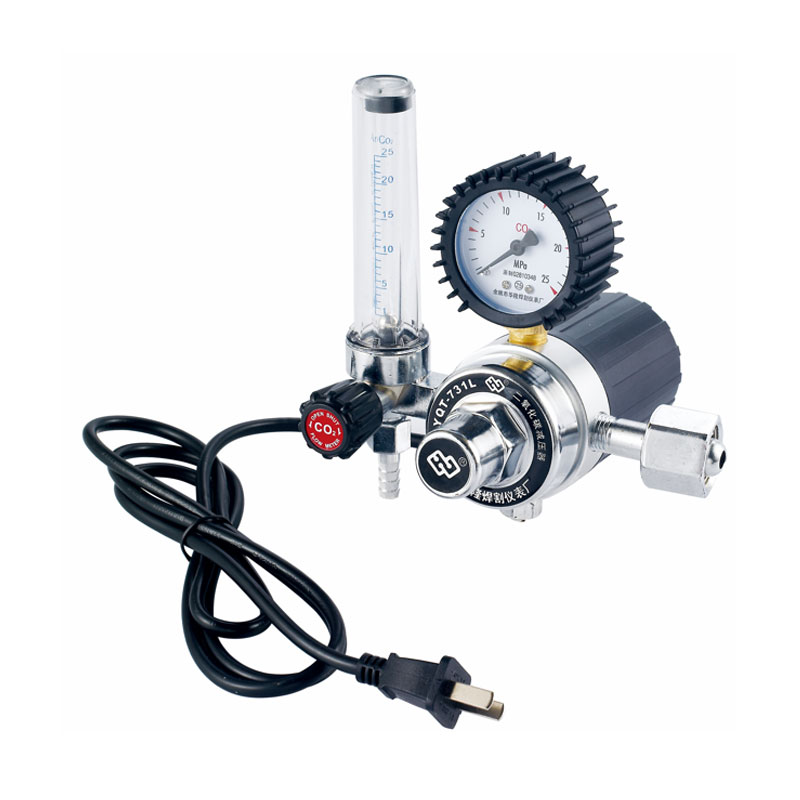
The JTR-01 High-Pressure Precision Carbon Dioxide Regulator is a device designed for applications th...
See Details

- PRODUCTS
- Pressure Regulator for Welding and Cutting
- Aquarium Pressure Regulator
- Beer and Beverage Pressure Regulator
- Pipeline Pressure Reducer
- CONTACT INFO
-
-
+86-180 6927 8236

-
[email protected]

-
No.1358,Tanjialing West Road, Lanjiang Street,Yuyao, 315400, Zhejiang

-
- MOBILE QR CODE

