

 English
  русский
  Español
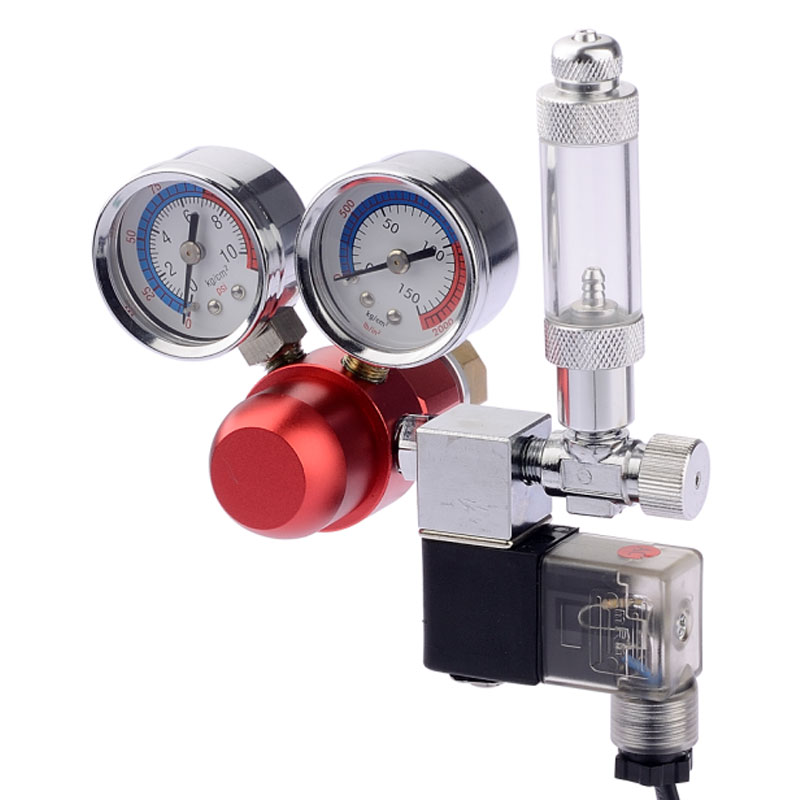
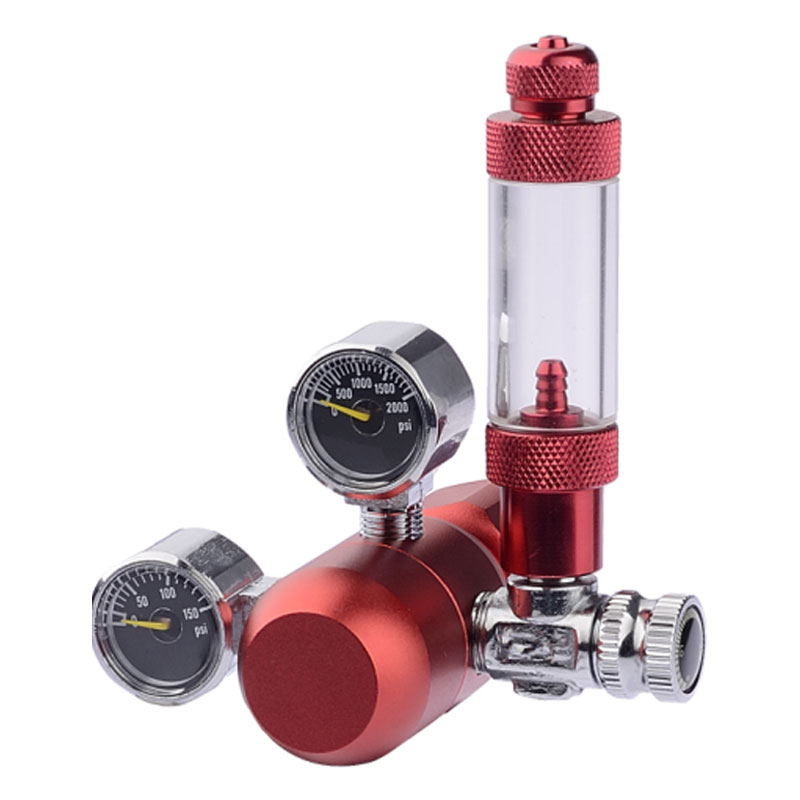
 This aquarium CO2 regulator with dual pressure gauges and single bubble counter is designed specific...
See DetailsWhat Is an Aquarium CO2 Regulator and Do You Really Need One for Your Tank?
Industry News-The Short Answer: Yes, If You Keep Live Plants
An aquarium CO2 regulator is a valve-and-gauge device that attaches to a pressurized CO2 cylinder and delivers a precise, controllable flow of carbon dioxide into your tank. If you maintain a planted freshwater aquarium, a CO2 regulator is one of the most impactful investments you can make — more so than a premium fertilizer or specialty substrate. Without it, most aquatic plants struggle to photosynthesize efficiently, grow slowly, and lose out to algae. For fish-only tanks, however, a regulator is unnecessary.
What Exactly Is an Aquarium CO2 Regulator?
A CO2 regulator is a precision pressure-reduction device. CO2 cylinders store gas at extremely high pressure — typically 800–1,800 psi (55–124 bar) when full. A regulator steps that down to a safe working pressure (usually 20–40 psi) and then allows fine-tuned control over how many bubbles per second enter the tank.
Key Components of a CO2 Regulator
- High-pressure gauge — shows remaining CO2 in the cylinder (typically 0–2,000 psi).
- Low-pressure (working) gauge — shows the pressure being delivered downstream (typically 0–60 psi).
- Needle valve — the fine-adjustment knob that lets you dial in bubbles per second with great accuracy.
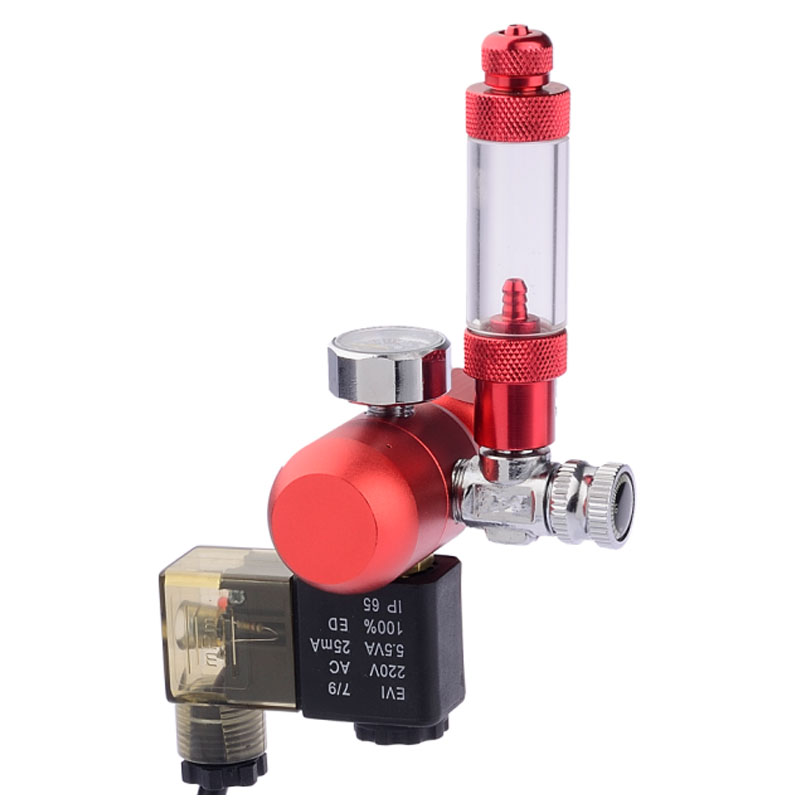
- Solenoid valve (on quality units) — an electrically operated on/off valve that connects to a timer so CO2 runs only during light hours.
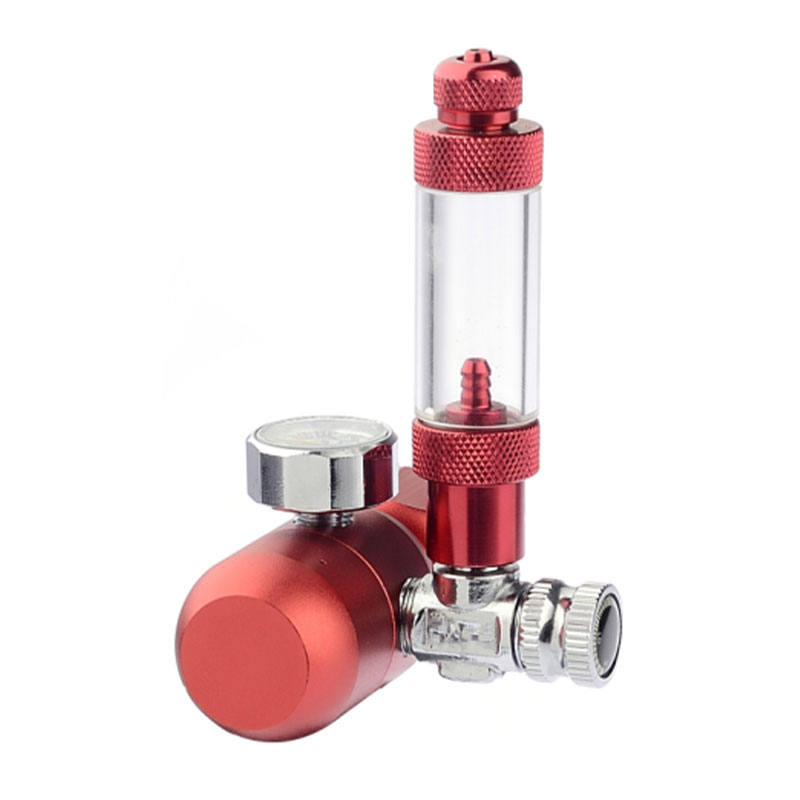
- Check valve / bubble counter — prevents tank water from back-siphoning into the regulator and counts the bubble rate visually.
How CO2 Actually Affects Your Planted Tank
Plants use carbon dioxide, water, and light to produce glucose through photosynthesis. In a closed aquarium, CO2 is almost always the limiting factor — not light, not fertilizers. The natural CO2 level in aquarium water is roughly 2–4 ppm, while planted tanks thrive at 20–30 ppm. That's a 7–15× increase over ambient levels.
At optimal CO2 levels, fast-growing stem plants like Rotala rotundifolia can grow 2–4 cm per day. The same plant at ambient CO2 may grow less than 0.5 cm per day and develop pale, stunted leaves. High CO2 also directly suppresses algae by giving plants a competitive edge in nutrient uptake.
| CO2 Level (ppm) | Plant Growth | Algae Risk | Fish Safety |
|---|---|---|---|
| 2–4 ppm (ambient) | Very slow | High | Safe |
| 10–15 ppm | Moderate | Moderate | Safe |
| 20–30 ppm (target) | Vigorous | Low | Safe |
| >35 ppm | Vigorous | Very low | Risky for fish |
Single-Stage vs. Dual-Stage Regulators: Which Should You Buy?
This is the most practically important decision when purchasing a regulator. The difference comes down to one dangerous phenomenon: end-of-tank dump (ETD).
When a CO2 cylinder nears empty, the liquid CO2 inside fully vaporizes and pressure drops rapidly. A single-stage regulator can misread this pressure drop and briefly surge CO2 output — sometimes dumping the entire remainder of the tank into the aquarium in hours, pushing CO2 levels above 40 ppm and suffocating fish. A dual-stage regulator uses a second pressure-reduction chamber that buffers against this spike, making ETD essentially impossible.
Side-by-Side Comparison
| Feature | Single-Stage | Dual-Stage |
|---|---|---|
| ETD Risk | Yes | No |
| Pressure Stability | Moderate | Excellent |
| Typical Price Range | $30–$80 | $80–$200+ |
| Best For | Budget setups, careful monitoring | All planted tanks, unattended setups |
| Fish Risk at End of Tank | Moderate to High | Very Low |
Recommendation: if your tank houses fish you care about, spend the extra $40–$80 and get a dual-stage unit. Popular reliable options include the Aquatek CO2 Mini Regulator (single-stage, ~$60) and the GreenLeaf Aquariums Dual Stage Regulator (~$130).
Do You Actually Need a CO2 Regulator? A Tank-by-Tank Breakdown
Not every aquarium requires pressurized CO2. Here's a practical guide based on tank type:
You Need a CO2 Regulator If:
- You run a high-tech planted tank with demanding species like Hemianthus callitrichoides (HC Cuba) or glossostigma.
- You use high-output lighting (above 30 PAR at substrate level) — more light without CO2 feeds algae, not plants.
- You want a lush, fast-growing aquascape and are dosing macro/micro fertilizers regularly.
- You are struggling with persistent algae outbreaks despite good water change routines.
You Likely Don't Need One If:
- You keep a fish-only tank with no live plants.
- You grow only low-tech, low-light plants like java fern, anubias, or mosses — these species do fine at ambient CO2.
- You run a shrimp-only nano tank where stable water parameters matter more than rapid growth.
- You are on a tight budget and not yet ready to manage CO2 levels — a DIY yeast CO2 system can bridge the gap.
CO2 Regulator vs. DIY Yeast CO2: Is the Regulator Worth It?
DIY yeast CO2 systems (a plastic bottle of sugar, water, and yeast) cost under $10 and produce CO2 without any equipment. They're a legitimate starting point, but they come with serious limitations:
- Uncontrollable output — CO2 production peaks mid-cycle and fades over 1–2 weeks, making stable dosing impossible.
- No solenoid option — CO2 runs 24/7, including overnight when plants consume O2 instead, which can stress fish.
- Messy maintenance — bottles need replacing every 1–2 weeks.
A pressurized CO2 regulator with a solenoid pays for itself in consistency and plant health within the first growing season. For a 20-gallon planted tank, a 5 lb cylinder ($20–$30 to refill) typically lasts 3–6 months, making the per-day cost well under $0.20.
How to Set Up a CO2 Regulator: The Basic Steps
Setting up a regulator for the first time is straightforward. Follow this sequence:
- Thread the regulator onto the CO2 cylinder using the correct fitting (CGA-320 is standard in the US). Hand-tighten, then snug with a wrench — do not overtighten.
- Connect the outlet tubing from the regulator to a bubble counter, then to a check valve, then to your diffuser inside the tank.
- Open the cylinder valve slowly — the high-pressure gauge will jump to 800–1,800 psi if the tank is full.
- Set working pressure on the low-pressure gauge to around 20–30 psi by adjusting the regulator knob.
- Adjust the needle valve to achieve 1–3 bubbles per second as a starting point for a 20–40 gallon tank.
- Test CO2 levels using a drop checker (filled with 4 dKH reference water and bromothymol blue indicator). Green = ~30 ppm. Yellow = too high. Blue = too low.
- Connect the solenoid to a timer so CO2 turns on 1 hour before lights on and off at lights out.
What to Look for When Buying an Aquarium CO2 Regulator
With dozens of options on the market ranging from $25 to $300+, here are the features that actually matter:
- Built-in solenoid — non-negotiable for any serious planted tank. Avoid regulators without one.
- Quality needle valve — cheap needle valves are difficult to adjust and drift over time. Brands like Fabco or Clippard are used in premium regulators for a reason.
- Dual-stage construction — strongly preferred if your budget allows, especially for tanks with fish.
- CGA-320 fitting compatibility — standard for paintball adapters and most US CO2 cylinders; verify before purchasing.
- Integrated bubble counter — saves you from buying a separate unit and simplifies the line.
Avoid unbranded regulators under $30 — they frequently lack a proper needle valve, making bubble-rate control nearly impossible and end-of-tank dump risk higher.
Final Verdict: Is a CO2 Regulator Worth It?
For any planted tank with moderate to high lighting, a CO2 regulator is not optional — it's the backbone of the system. No amount of fertilizer, substrate, or premium lighting can compensate for a CO2 deficiency. Conversely, even a mid-range $80–$120 dual-stage regulator with a solenoid will unlock plant growth and tank clarity that beginner hobbyists often think requires years of experience.
If you are running a low-tech, low-light tank with hardy plants, you can defer this purchase — but the moment you upgrade your lighting or attempt a carpet plant, a regulator should be your next buy. Start with a reputable dual-stage unit, pair it with a drop checker, and let the plants tell you if your CO2 is dialed in.
Related products
-
-
This digital CO2 regulator for aquarium systems provides stable gas support for aquatic plant landsc...
See Details -
Aquarium CO2 Regulator's precision adjustment design provides accurate CO2 volume at LP 150 PSI / HP...
See Details -
This aquarium plant CO2 pressure regulator is designed for aquatic plant landscaping and aquarium sy...
See Details -
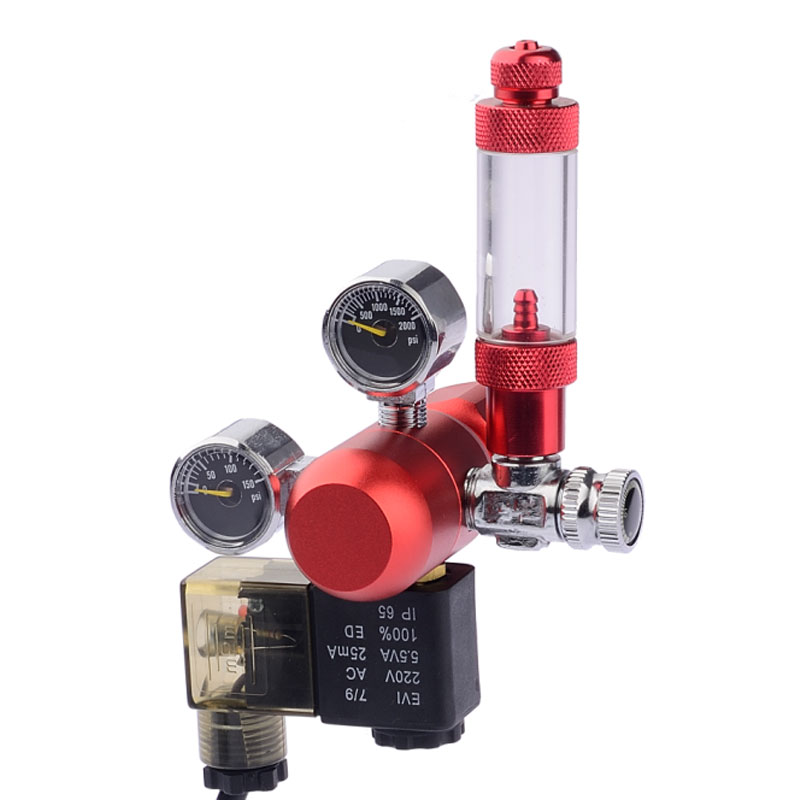
This aquarium CO2 regulator with solenoid valve and dual bubble counter is designed to provide a mor...
See Details -
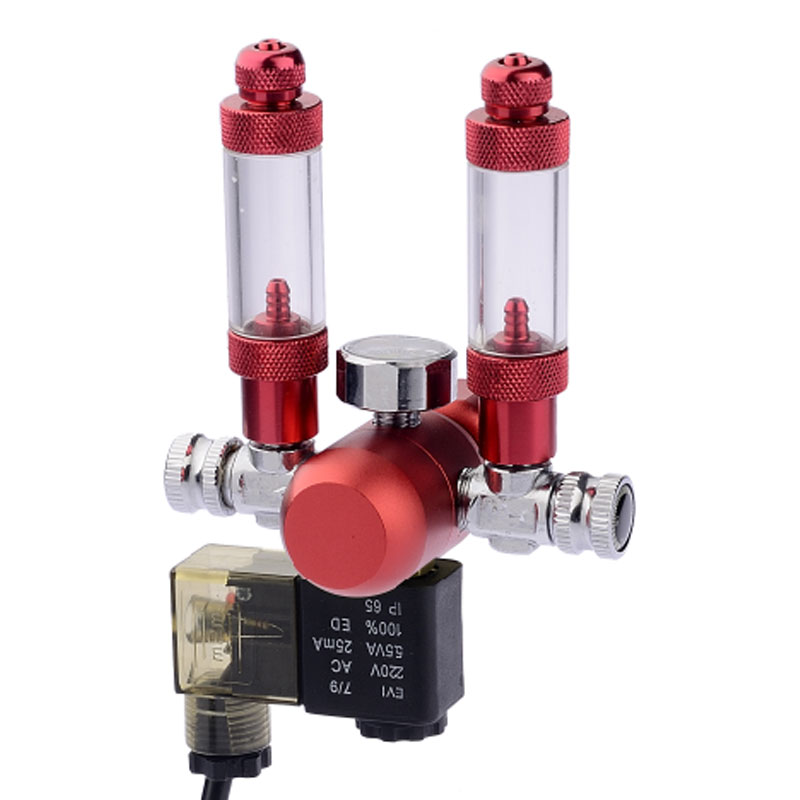
This aquarium CO2 regulator with dual bubble counters is designed for aquascaping and aquatic plant ...
See Details -
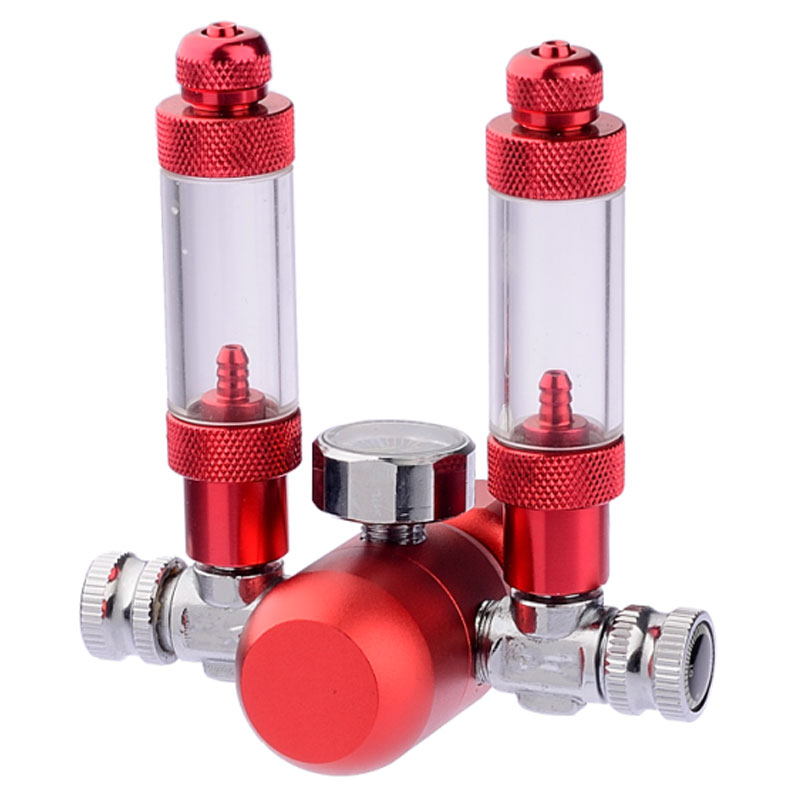
This environmentally friendly dual-gauge CO2 aquarium pressure regulator is designed for aquatic pla...
See Details -
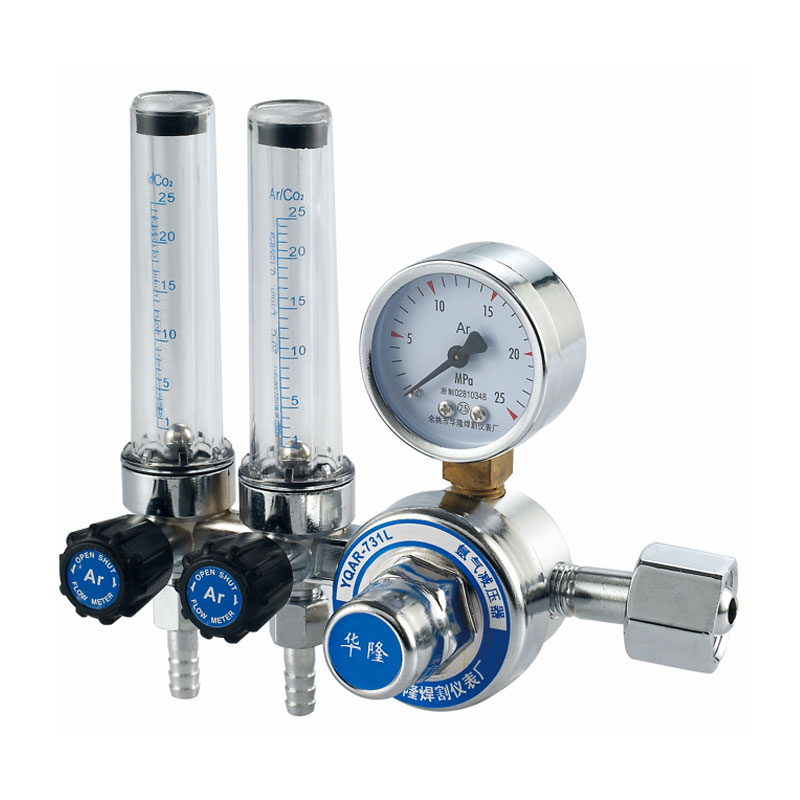
The ArR-01-2 High-Performance Argon Regulator is a pressure management device designed for precision...
See Details

- PRODUCTS
- Pressure Regulator for Welding and Cutting
- Aquarium Pressure Regulator
- Beer and Beverage Pressure Regulator
- Pipeline Pressure Reducer
- CONTACT INFO
-
-
+86-180 6927 8236

-
[email protected]

-
No.1358,Tanjialing West Road, Lanjiang Street,Yuyao, 315400, Zhejiang

-
- MOBILE QR CODE

