

 English
  русский
  Español
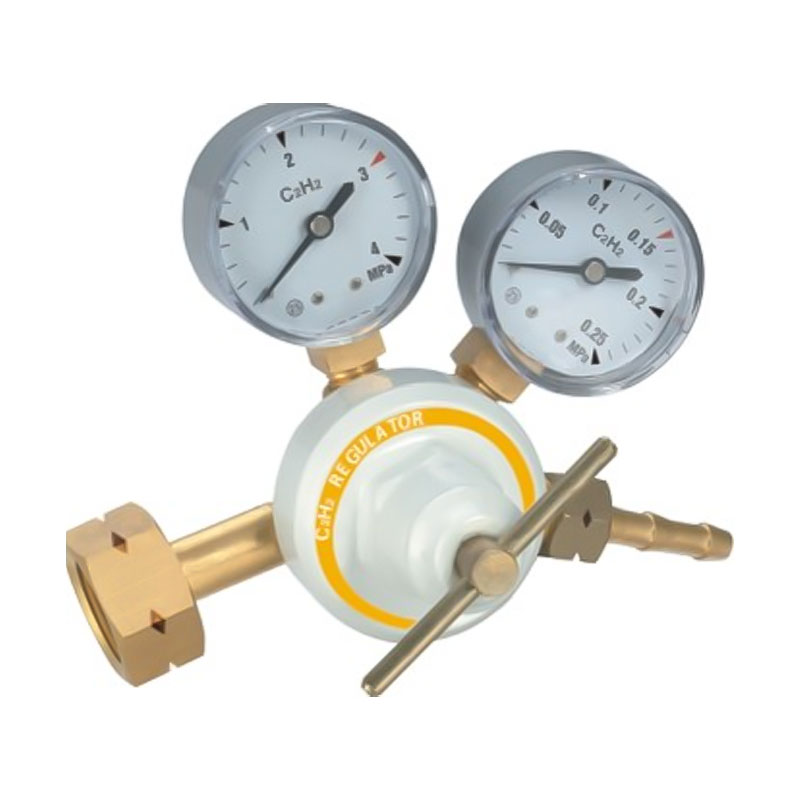
 The AR-56 High-Stability Welding and Cutting Acetylene Regulator is designed with a focus on pressur...
See DetailsHow Does a Pressure Regulator Work in Welding and Cutting Applications?
Industry News-A pressure regulator in welding and cutting works by automatically reducing high-pressure gas from a cylinder — often 2,000 PSI or more — down to a stable, usable working pressure between 1 and 100 PSI, depending on the process and gas type. It holds that output pressure steady even as the cylinder empties and inlet pressure drops. Without a regulator, uncontrolled gas pressure would make consistent welding or cutting impossible and create serious safety hazards. This guide explains exactly how that process works, what happens inside the regulator, and what determines the right settings for each application.
Why Pressure Regulation Is Critical in Welding and Cutting
A standard compressed oxygen cylinder stores gas at pressures up to 2,200 PSI (151 bar). An acetylene cylinder operates at up to 250 PSI (17 bar). Neither of these pressures is usable at the torch — oxygen for cutting typically requires 30–60 PSI at the torch inlet, and acetylene should never exceed 15 PSI (1 bar) in use due to decomposition risk above that threshold.
Beyond safety, pressure stability directly determines weld and cut quality. A fluctuating gas supply changes the flame characteristics mid-process, causing:
- Inconsistent bead width and penetration in gas welding
- Ragged, oxidized cut edges in oxy-fuel cutting
- Porosity in MIG and TIG welds from shielding gas surges
- Backfire and flashback risk when pressure drops unexpectedly at the torch
The regulator is the component that makes all of this controllable. It is not optional equipment — it is the foundational safety and performance device in any gas welding or cutting system.
The Internal Mechanism: What Happens Inside a Pressure Regulator
All welding and cutting pressure regulators — regardless of gas type or brand — operate on the same fundamental mechanical principle: a spring-loaded diaphragm balancing inlet pressure against a preset outlet pressure. Here is how each component contributes:
The Inlet Port and High-Pressure Chamber
Gas enters the regulator from the cylinder through the inlet port and fills the high-pressure chamber. The inlet gauge — the larger of the two gauges on most regulators — reads this incoming cylinder pressure directly. As the cylinder empties, this reading drops progressively from full charge to zero.
The Seat and Valve Assembly
Between the high-pressure chamber and the low-pressure (delivery) chamber sits a precision valve — typically a needle valve or poppet valve — resting against a machined seat. This valve is the pressure reduction point. Gas passes through this restriction and expands into the low-pressure chamber, dropping dramatically in pressure as it does so. The size of the gap between the valve and seat at any given moment determines the flow rate and delivery pressure.
The Diaphragm
A flexible metal or synthetic diaphragm separates the low-pressure chamber from the spring side of the regulator body. Gas pressure in the low-pressure chamber pushes against one face of the diaphragm. The diaphragm is the sensing element — it responds to changes in delivery pressure in real time, moving in or out by fractions of a millimeter to maintain equilibrium.
The Adjusting Spring and Screw
On the opposite face of the diaphragm, a calibrated compression spring applies a preset force. The adjusting screw (the knob the operator turns) compresses or releases this spring, setting the target delivery pressure. Turning the screw clockwise increases spring force, which pushes the valve open further and raises delivery pressure. Turning it counterclockwise reduces spring force, allowing the valve to close more and lowering delivery pressure.
The Self-Regulating Feedback Loop
This is the key to understanding how a regulator maintains steady output pressure automatically:
- The operator sets a target pressure by adjusting the spring.
- Gas flows through the valve into the low-pressure chamber and out to the torch.
- If demand increases (e.g., torch valve opens wider), delivery pressure momentarily drops.
- The diaphragm senses the drop, deflects toward the low-pressure side, and pushes the valve open slightly further.
- More gas flows through, restoring pressure to the set point.
- If demand decreases, pressure rises, the diaphragm deflects the other way, the valve closes slightly, and pressure returns to set point.
This feedback loop operates continuously and instantaneously, with no electrical components or operator input required. A well-maintained regulator holds delivery pressure within ±1–2 PSI of the set point across a wide range of flow rates and inlet pressures.
Single-Stage vs. Dual-Stage Regulators: Key Differences
Welding and cutting regulators come in two fundamental designs. The choice between them has a direct impact on pressure stability throughout the cylinder's service life.
Single-Stage Regulators
A single-stage regulator reduces cylinder pressure to delivery pressure in one step using one diaphragm-and-valve assembly. These are simpler, lighter, and less expensive — typically $30–$80 for standard welding grades. The limitation is that as the cylinder empties and inlet pressure falls, the delivery pressure tends to rise slightly (a characteristic called "supply pressure effect" or "droop"). The operator must periodically readjust the set screw to compensate. For intermittent or short-duration work, this is acceptable.
Dual-Stage Regulators
A dual-stage regulator performs two sequential pressure reductions. The first stage reduces cylinder pressure to a fixed intermediate pressure (typically 200–400 PSI depending on the gas). The second stage reduces the intermediate pressure to the final delivery pressure set by the operator. Because the second stage always sees a stable intermediate pressure regardless of what the cylinder is doing, delivery pressure remains virtually constant from full cylinder to near-empty — typically within ±0.5 PSI with no operator adjustment required. Dual-stage regulators cost $80–$250+ but are the standard choice for production welding, precision cutting, and any application requiring consistent results over long working sessions.
| Feature | Single-Stage | Dual-Stage |
|---|---|---|
| Pressure reduction steps | 1 | 2 |
| Output pressure stability | Varies as cylinder empties | Consistent full cylinder to near-empty |
| Operator readjustment needed | Periodically | Rarely |
| Typical cost | $30–$80 | $80–$250+ |
| Weight and size | Lighter, more compact | Heavier, larger body |
| Best for | Hobbyist, short sessions, low-precision work | Production, precision, long continuous runs |
Pressure Regulator Types by Gas: Oxygen, Acetylene, Argon & CO₂
Regulators are gas-specific and must never be interchanged between incompatible gases. Each gas has different pressure ranges, chemical compatibility requirements, and connection standards. Using the wrong regulator is both a performance failure and a safety hazard.
| Gas | Max Inlet Pressure | Typical Working Pressure | Connection Standard (US) | Key Requirement |
|---|---|---|---|---|
| Oxygen | 3,000 PSI | 5–60 PSI | CGA 540 (right-hand thread) | Must be oxygen-clean; no oil or grease contact |
| Acetylene | 400 PSI | 1–15 PSI | CGA 510 (left-hand thread) | Never exceed 15 PSI delivery — decomposition risk |
| Argon / Argon-CO₂ | 3,000 PSI | 10–40 CFH (flow, not PSI) | CGA 580 | Flowmeter-style regulator preferred for MIG/TIG |
| CO₂ | 1,800 PSI | 10–35 CFH | CGA 320 | Regulator must handle liquid-to-gas transition; heater recommended |
| Propane / Propylene | 250 PSI | 5–30 PSI | CGA 510 or 695 | Nitrile or neoprene seals required (not rubber) |
The left-hand thread on acetylene regulators and cylinders is a deliberate safety design — it physically prevents an acetylene regulator from being accidentally connected to an oxygen cylinder and vice versa. Never use thread adapters to connect a regulator to a cylinder it was not designed for.
How to Read the Two Gauges on a Welding Regulator
Every standard welding and cutting regulator has two pressure gauges, and they measure completely different things. Confusing them is a common mistake among new welders.
The High-Pressure (Inlet) Gauge
This gauge — typically the larger one, mounted closest to the cylinder — reads the pressure remaining inside the cylinder. On an oxygen cylinder, a full reading is approximately 2,000–2,200 PSI. This gauge tells you how much gas you have left, not what pressure is going to your torch. When this gauge reads below 200 PSI, the cylinder is effectively empty and should be exchanged before it reaches zero — running a cylinder completely dry risks contaminating it with atmospheric moisture.
The Low-Pressure (Delivery / Working) Gauge
The second gauge reads the pressure the regulator is delivering to the hose and torch. This is the value the operator sets using the adjusting screw and monitors during operation. This is the only gauge that directly affects your weld or cut. Setting this gauge correctly for your process is the primary adjustment task when setting up a welding or cutting station.
Recommended Working Pressures by Process
The correct delivery pressure depends on the process, the torch tip size, and the material thickness. The following ranges serve as reliable starting points — always refer to your torch manufacturer's tip chart for precise settings:
| Process | Gas | Typical Working Pressure | Notes |
|---|---|---|---|
| Oxy-acetylene welding (light) | O₂ / C₂H₂ | O₂: 5–10 PSI / C₂H₂: 3–7 PSI | Thin sheet metal up to 3mm |
| Oxy-acetylene welding (heavy) | O₂ / C₂H₂ | O₂: 10–25 PSI / C₂H₂: 7–12 PSI | Plate over 6mm; never exceed 15 PSI acetylene |
| Oxy-fuel cutting (light) | O₂ / C₂H₂ | O₂: 20–40 PSI / C₂H₂: 3–8 PSI | Steel up to 25mm thick |
| Oxy-fuel cutting (heavy plate) | O₂ / C₂H₂ | O₂: 40–60 PSI / C₂H₂: 8–12 PSI | Steel 25–150mm; larger cutting tips required |
| MIG welding (shielding) | Ar / CO₂ mix | 15–25 CFH | Measured in cubic feet per hour, not PSI |
| TIG welding (shielding) | Pure Argon | 10–20 CFH | Lower flow than MIG; higher purity argon preferred |
Common Pressure Regulator Problems and What Causes Them
Understanding the mechanism makes troubleshooting straightforward. Most regulator failures trace to one of four root causes:
Creep (Delivery Pressure Rising with Torch Closed)
If the delivery gauge reading climbs slowly when the torch is shut off, the inlet valve seat is leaking — gas is bypassing the closed valve and pressurizing the low-pressure chamber. This is called "creep" and is a sign the valve seat is worn, contaminated, or damaged. A regulator exhibiting creep must be repaired or replaced — it is unsafe to continue using it.
Regulator Freeze (CO₂ and High-Flow Applications)
When gas expands rapidly through the valve, its temperature drops sharply (the Joule-Thomson effect). At high flow rates or with CO₂ — which transitions from liquid to gas inside the cylinder — this cooling can freeze moisture in the regulator body, icing up the valve and restricting or blocking flow entirely. The solution is a regulator with an integrated heater, or an inline gas heater installed between the cylinder and regulator.
Diaphragm Failure
A cracked or perforated diaphragm causes the regulator to lose pressure regulation entirely — delivery pressure will either collapse to zero or spike uncontrollably. External signs include gas escaping from the vent hole in the regulator body (designed to safely vent if the diaphragm fails) and erratic gauge behavior. Diaphragm replacement is a standard regulator service item.
Contamination from Oil or Backfire
Oxygen regulators are particularly sensitive to hydrocarbon contamination. Even a small amount of oil or grease in contact with high-pressure oxygen can ignite spontaneously — a phenomenon known as oxygen enrichment ignition. Never use thread sealant, pipe dope, or petroleum-based lubricants on any oxygen regulator connection. Use only PTFE tape rated for oxygen service, and only on male threads, never on the regulator inlet itself.
Step-by-Step: How to Set Up and Adjust a Welding Pressure Regulator
Follow this sequence every time you set up a regulator on a new cylinder or after changing gas type:
- Crack the cylinder valve briefly before attaching the regulator — this blows out any dust or debris from the outlet port that could contaminate the regulator seat.
- Back out the adjusting screw fully (counterclockwise until loose) before opening the cylinder valve. This ensures no pressure is sent downstream during pressurization.
- Open the cylinder valve slowly — stand to the side of the regulator face, never directly in front of the gauges. Open oxygen cylinders fully; open acetylene cylinders no more than 1.5 turns for safety.
- Read the inlet gauge to confirm cylinder contents. If it reads zero on a cylinder that should be full, there is a connection leak or a defective cylinder.
- Open the torch valve(s) slightly to create a flow condition, then turn the adjusting screw clockwise until the delivery gauge reaches your target working pressure.
- Close the torch valve and observe the delivery gauge for 30 seconds. If the reading climbs, the regulator has a creep problem and should not be used.
- Recheck delivery pressure with torch open — the pressure under flow conditions may differ slightly from the static (torch-closed) reading, particularly with single-stage regulators.
Final Summary: What to Remember About Welding and Cutting Pressure Regulators
A pressure regulator works by using a spring-loaded diaphragm to continuously balance and correct delivery pressure in real time — automatically and mechanically, with no electronics. Single-stage models are adequate for light, intermittent work; dual-stage models are the professional standard for consistent results over long sessions. Every gas requires its own dedicated regulator with the correct connection, seals, and pressure rating — gas-specific standards exist for critical safety reasons and must never be circumvented.
Set the delivery pressure to match your process and torch tip specification, verify for creep after every setup, and inspect seals and diaphragms on a scheduled basis. A properly selected, correctly set, and well-maintained regulator is one of the most reliable components in any welding or cutting system — and one of the most consequential when it fails.
Related products
-
-
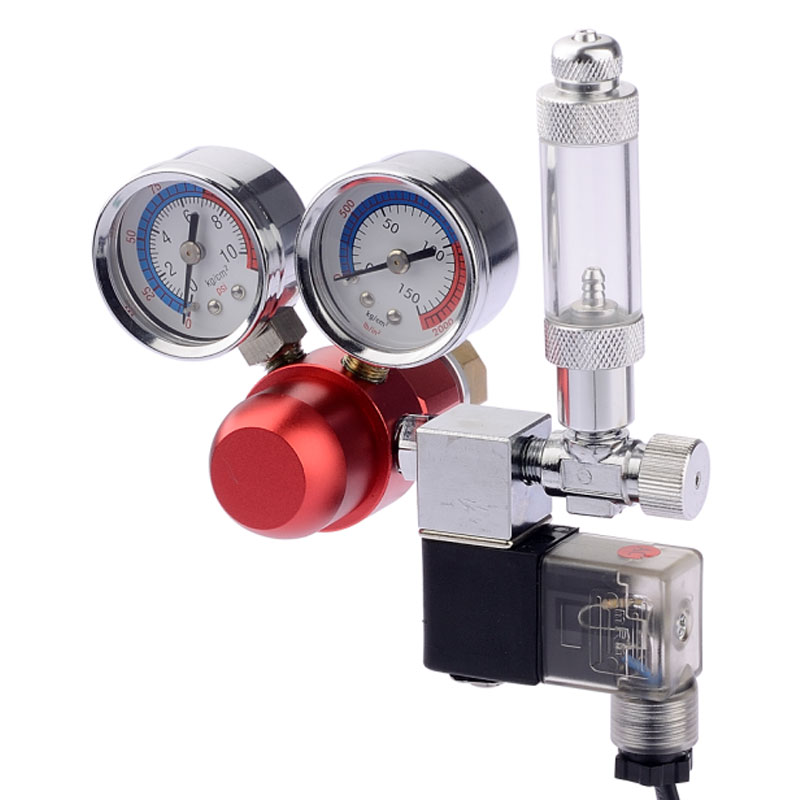
This aquarium CO2 regulator with dual pressure gauges and single bubble counter is designed specific...
See Details -
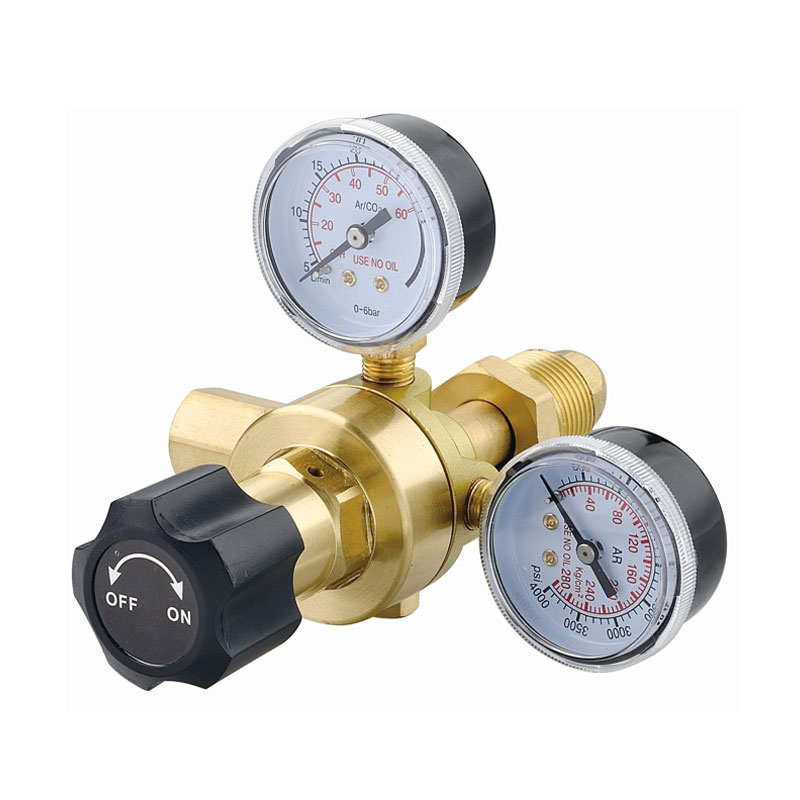
The ArR-192 Industrial Welding Argon Regulator is a pressure regulation device specifically designed...
See Details -
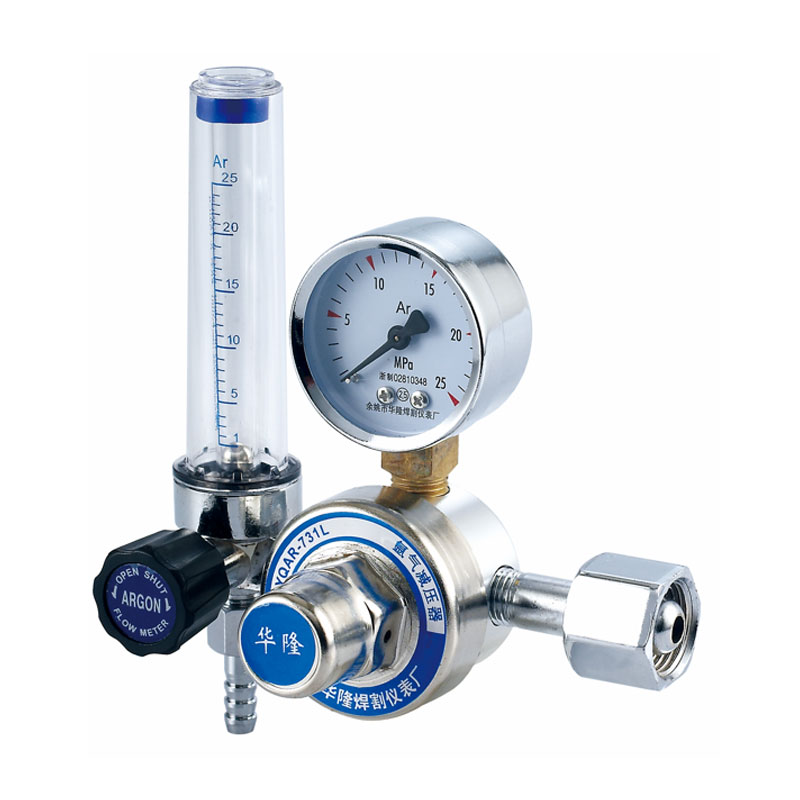
The ArR-01 High-Pressure Argon Cylinder Regulator is a pressure regulation device designed for appli...
See Details -
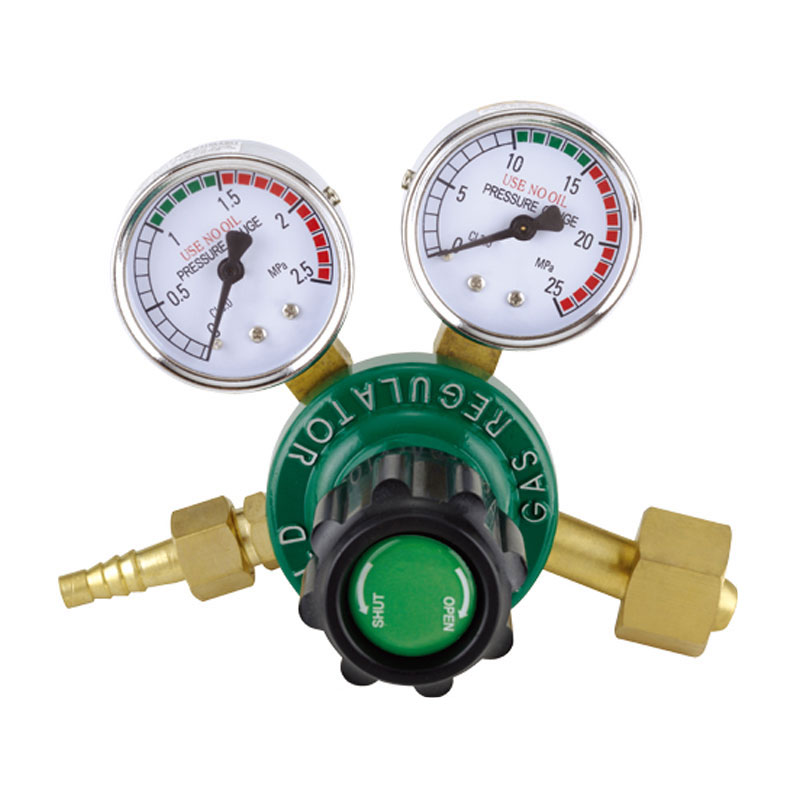
The OR-09 Customizable Pressure and Interface Oxygen Pressure Reducing Controller is designed for pr...
See Details -
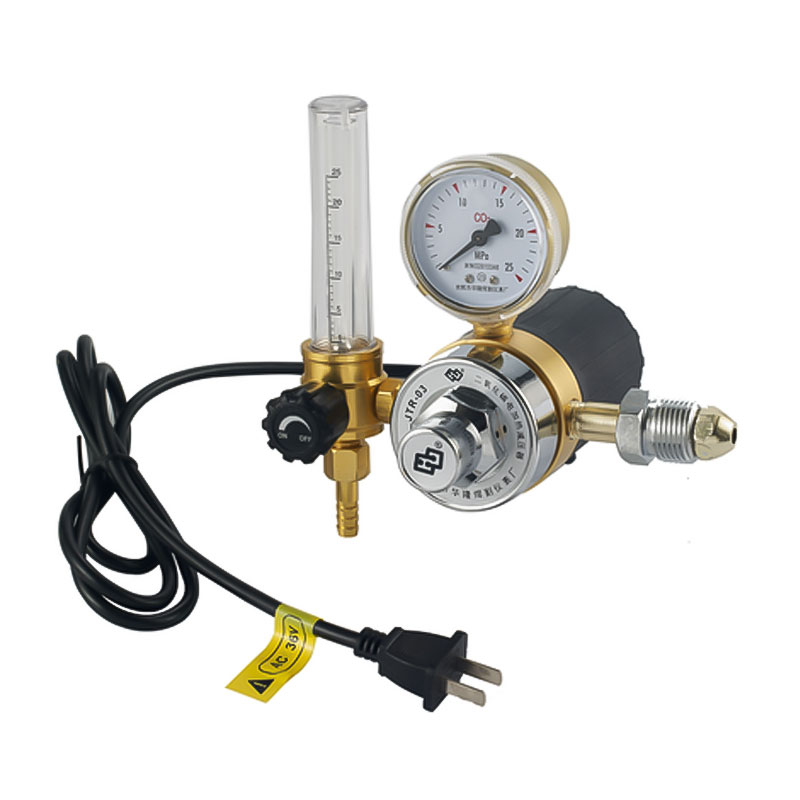
The JTR-02A Welding Carbon Dioxide Flow Controller is specifically designed for welding operations. ...
See Details -
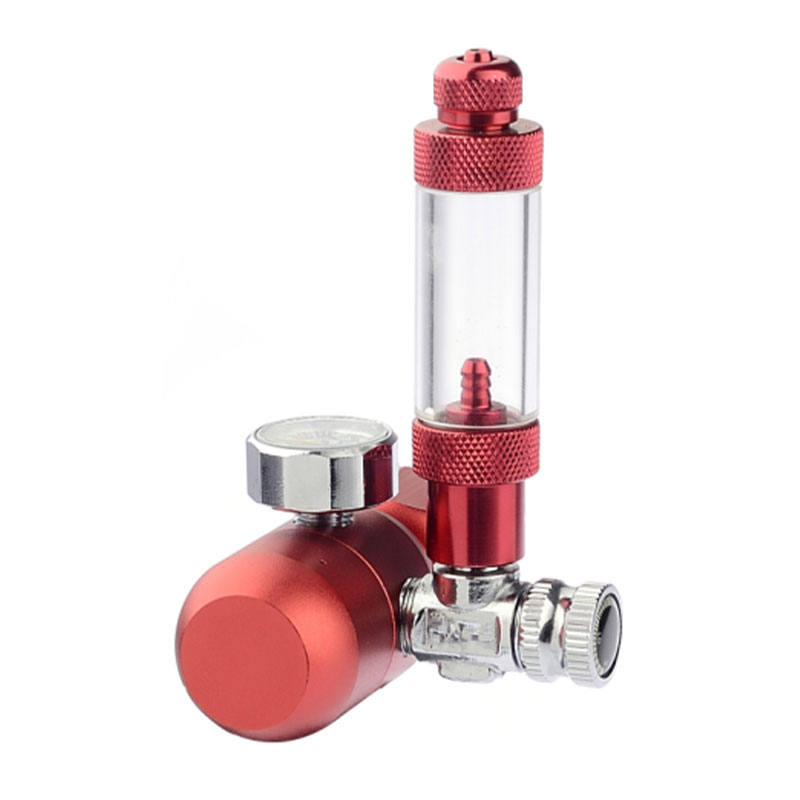
This aquarium plant CO2 pressure regulator is designed for aquatic plant landscaping and aquarium sy...
See Details -
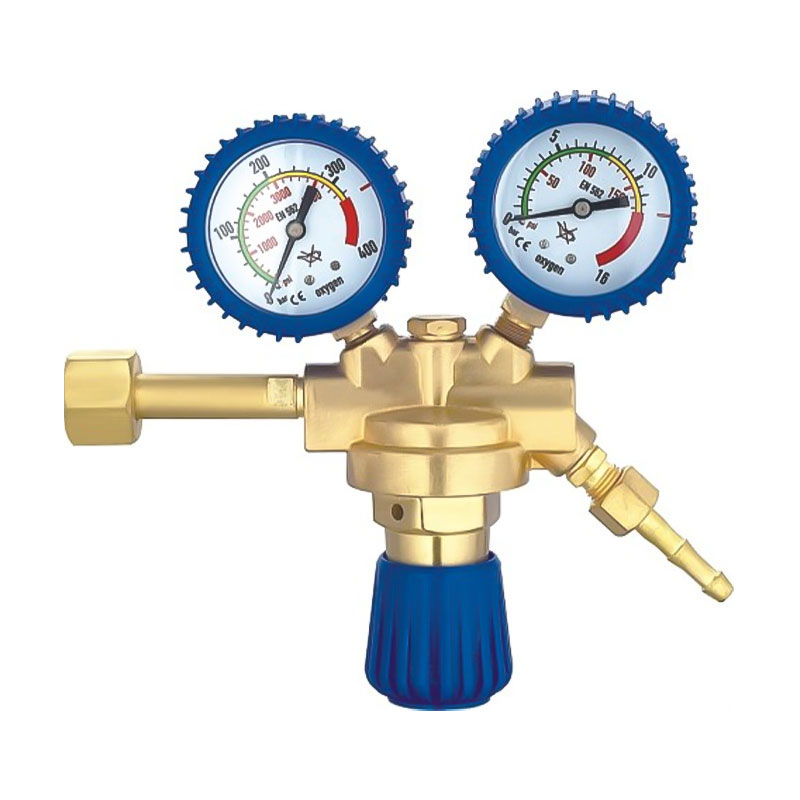
The OR-07A Continuous Operation Oxygen Pressure Control Regulator can handle input pressures as high...
See Details

- PRODUCTS
- Pressure Regulator for Welding and Cutting
- Aquarium Pressure Regulator
- Beer and Beverage Pressure Regulator
- Pipeline Pressure Reducer
- CONTACT INFO
-
-
+86-180 6927 8236

-
[email protected]

-
No.1358,Tanjialing West Road, Lanjiang Street,Yuyao, 315400, Zhejiang

-
- MOBILE QR CODE

