

 English
 русский
 Español
The ArR-192 Industrial Welding Argon Regulator is a pressure regulation device specifically designed...
See DetailsCO2, Argon and Helium Flowmeter Regulators: A Practical Selection Guide
Industry News-Walk into almost any fabrication shop, brewery or planted-tank room and you will find the same small piece of equipment quietly doing a big job: the flowmeter regulator hanging off the cylinder. It takes gas at a couple of hundred bar, drops it to something a torch or a beverage line can actually use, and shows you on a little tapered tube exactly how much gas is moving. When it works, nobody notices it. When it drifts, you burn through cylinders, fight porosity in a weld, or pour flat beer.
We have been building pressure regulators at Yuyao Hualong since 2007, and the questions we get about CO2, argon and helium flowmeter regulators are almost always the same three. Why does my reading wander? Why does the same regulator behave differently on a different gas? And which unit belongs on which cylinder? This guide is our answer, written the way we would explain it across the bench rather than the way a catalogue would.
200-300 bar inlet pressure on a full argon or helium cylinder
10-20 CFH, the usual MIG shielding range for argon-rich mixes
~3x rough scale error when helium runs through an argon tube
What a flowmeter regulator actually does
The name is a compression of two jobs that happen in one brass body, and it helps to separate them before choosing anything.
The regulator half
A spring pushes against a diaphragm, the diaphragm pushes against a valve seat, and turning the knob changes how hard the spring presses. That is the whole idea. An inlet gauge shows what is left in the cylinder; a delivery gauge shows what the seat is letting through. On a single-stage unit the reduction happens in one step. On a two-stage unit it happens twice, so the second stage always sees a steady inlet rather than one that slowly collapses as the cylinder empties.
The flowmeter half
A vertical tapered tube with a float inside. Gas enters from the bottom, lifts the float, and the height it settles at corresponds to a flow rate printed on the tube. A needle valve downstream gives you the fine adjustment. Read the scale at the widest point of the float, keep the tube vertical, and remember that the number is only true at the delivery pressure the tube was calibrated for.
Pressure and flow are not the same question, which is where a lot of confusion starts. A regulator that holds delivery pressure beautifully can still leave you guessing at flow, and a flowmeter that reads perfectly can sit behind a regulator that sags under load. If you want to go deeper into how restriction upstream changes what arrives downstream, our note on how a pressure reducer affects flow rate is a useful companion read.
CO2, argon and helium: same hardware, very different behaviour
Here is the part that surprises people most. A rotameter does not measure mass or volume directly; it measures how much drag a moving gas puts on a float. Light gases put less drag on the same float at the same real flow, so the float sits lower and the scale under-reads. Heavier gases do the opposite. This is why an argon tube and a helium tube look identical and are not interchangeable.
Relative gas density, air = 1. The lighter the gas, the lower the float sits for the same true flow.
| Gas | Relative density | Typical shielding flow | Cylinder behaviour | What it means for the tube |
|---|---|---|---|---|
| Argon | 1.38 | 10-20 CFH | Gas throughout, around 200 bar full | Standard calibration; very stable readings |
| CO2 | 1.53 | 15-25 CFH | Liquid, 50-60 bar and temperature dependent | Needs a CO2 range; heavy draw cools the body |
| Helium | 0.14 | 20-40 CFH | Gas throughout, around 200 bar full | Argon scale under-reads by roughly three times |
CO2 deserves its own warning. In the cylinder it sits as a liquid, so the inlet gauge tracks room temperature rather than contents, and it will read the same on a full cylinder as on one nearly empty on a warm afternoon. On a continuous high-flow job the gas also chills as it vaporises, which is why heavy-duty beverage and welding CO2 regulators are built with more mass and sometimes a heated body. A unit sized for occasional welding can ice up on a bottling line.
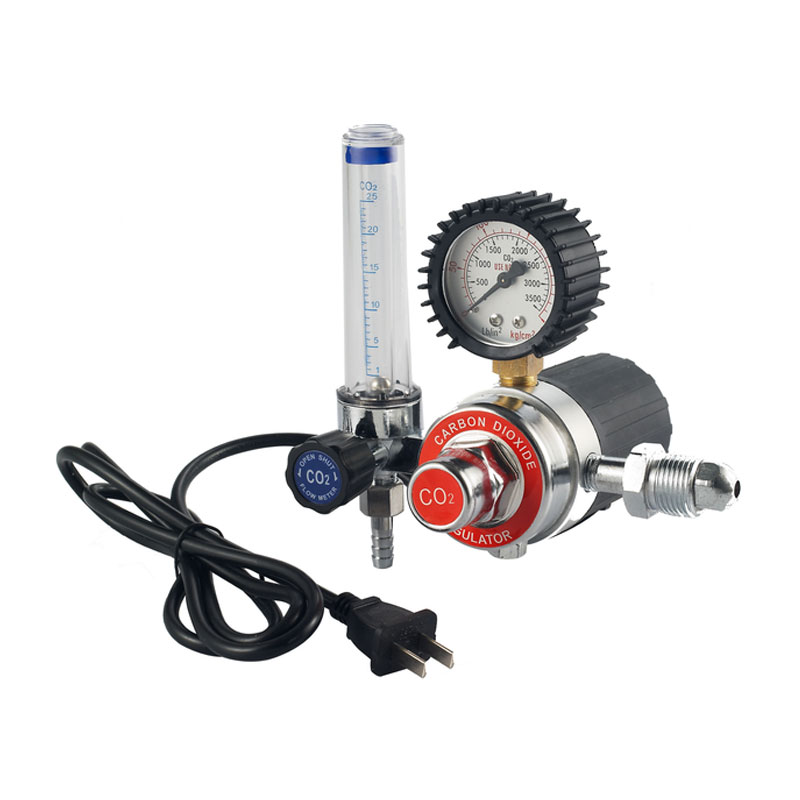 JTR-01A High-Precision CO2 Pressure RegulatorA CO2 cylinder regulator with G5/8 inlet and 3/8-inch hose barb, suited to precise welding or beverage gas control.View Product →
For helium the practical rule is simple: use a helium-calibrated tube, or apply the manufacturer's correction factor. A welder who sets the float to 15 on an argon scale and gets closer to 45 CFH of helium is not getting better coverage, he is buying gas by the truckload and creating turbulence that pulls air into the shielding envelope.
Where these regulators earn their keep
The same brass body turns up in very different rooms. What changes is the delivery pressure, the flow range and the fittings on the outlet.
MIG and MAG welding
Argon-rich mixes with CO2, usually 10-20 CFH. Constant delivery pressure matters more than a wide adjustment range, because a regulator that creeps mid-pass shows up as porosity and spatter.
TIG and purge work
Pure argon at low flow, often below 15 CFH. A fine needle valve and a readable low end of the scale count for more than a large dial.
Helium leak testing
Low, precise flow into a sniffer or chamber. Helium-calibrated tubes and tight shut-off are essential here.
Beverage dispense
CO2 at 0-60 psi for carbonation, pushing and packaging. Hygiene, stable low pressure and a body that will not freeze on a busy night.
Planted aquariums
Very low CO2 flow through a needle valve, often with a bubble counter so the aquarist can count rather than guess. If that is your world, our overview of aquarium CO2 pressure regulators covers the control side in more detail.
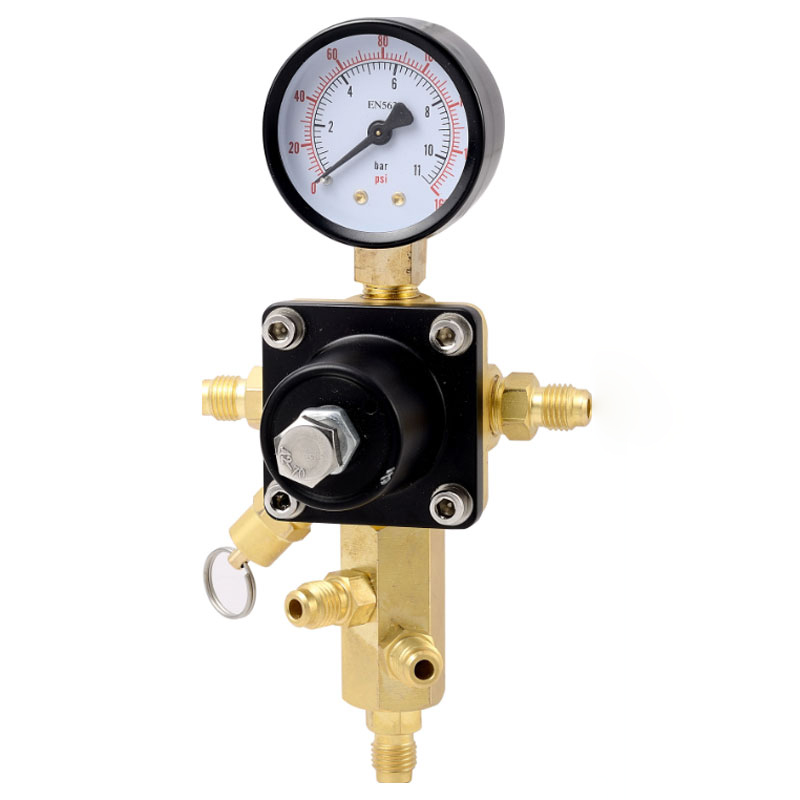 TR-63-1 Brass CO2 Regulator for Beverage DispensingAll-brass adjustable regulator with 0–60/160/230 psi outputs and CGA320 inlet, aimed at stable beer and soft-drink dispensing.View Product →
Notice how differently the beverage and welding versions are set up despite sharing a family tree. The beverage unit lives at low pressure with a repeatable, easily locked setting; the welding unit lives at a slightly higher delivery pressure with a scale you can read across a noisy workshop.
Single-stage or two-stage? Follow the gas path
1
Cylinder
Full argon or helium sits near 200 bar, dropping as the day goes on. CO2 stays flat-ish but moves with temperature.
2
First reduction
On a two-stage regulator the inlet pressure is knocked down to an intermediate level, so the working stage never sees 200 bar.
3
Second reduction
The fine stage holds delivery pressure steady from a full cylinder to the last few bar. This is what stops the flow drifting through a long shift.
4
Flowmeter and outlet
The tube gives you a visual set point and the needle valve trims it. Hose bore and length downstream will still affect what reaches the torch, so keep runs sensible.
Single-stage units are perfectly good for intermittent work where somebody is watching the float. Two-stage units pay for themselves in continuous production, in calibration labs and anywhere a session lasts long enough for cylinder pressure to fall noticeably.
Reading the float: four things that go wrong
The float bounces
Usually a worn seat, a dirty needle valve or a regulator that is simply too large for the flow you want. A big regulator asked for 4 CFH will hunt. Match the body to the job.
The reading is taken in the wrong place
Read at the top of the float, with the tube vertical and the gas already flowing for a few seconds. A cold tube straight off a cylinder wall will read oddly until it settles.
Gas hisses at the bonnet
A diaphragm or seat problem, not a setting problem. Stop, close the cylinder valve, and have it looked at. Never chase a leak with a spanner while the system is live.
The number looks right but the weld suffers
Check the gas first. An argon tube on a helium or mixed-gas cylinder, a leaking hose or a blocked spatter guard will all keep the float happy while the arc gets nothing useful.
A short checklist before you order
- Name the gas and the mix, not just the process. Argon with 20 percent CO2 behaves differently from pure argon.
- Fix the flow range you actually use, then pick the tube that puts that range in the readable middle of the scale.
- Confirm cylinder pressure and connection standard, including thread type and whether a nut and tail are supplied.
- Decide between single-stage and two-stage based on how long a session runs.
- Check delivery pressure against the downstream equipment, not against habit.
- Ask about calibration for helium if helium is in the plan at all.
For argon work where the pressure has to stay put while the cylinder drains, a constant-pressure design is the comfortable choice: the spring and diaphragm keep delivery steady and the float stops wandering between passes.
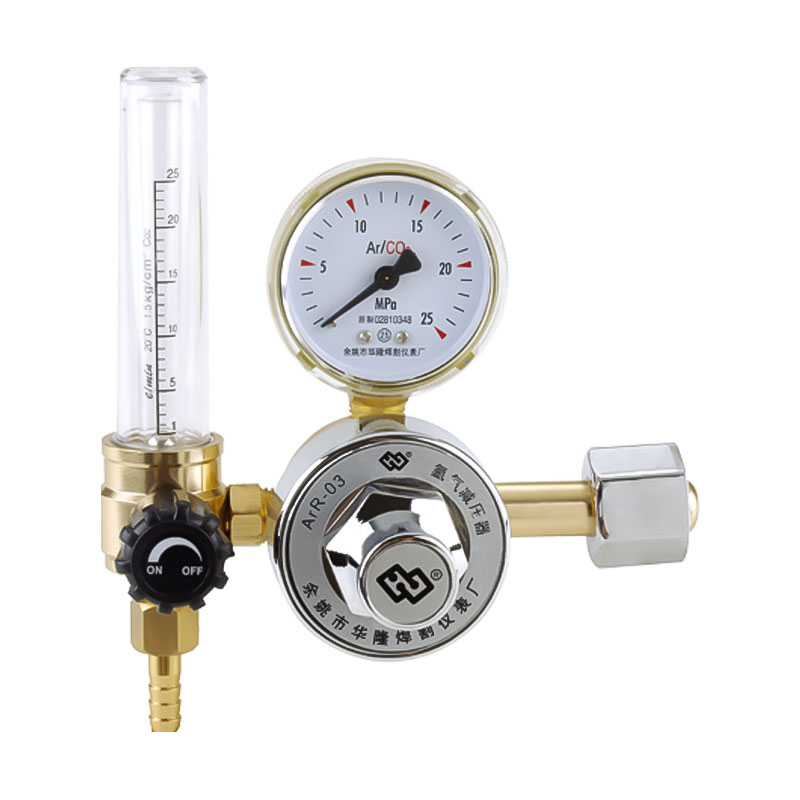 ArR-02 Industrial Constant-Pressure Argon RegulatorConstant-pressure argon regulator with 0–25 MPa inlet and 0–25 LPM output, useful where steady shielding-gas flow matters.View Product →
Frequently asked questions
Can I use one flowmeter regulator for CO2, argon and helium?
Mechanically, sometimes. Accurately, rarely. The tube calibration is gas-specific, and CO2 also brings liquid-draw and cooling issues that argon and helium do not. A dedicated tube per gas is the honest answer.
Why does my CO2 gauge never seem to drop?
Because it is reading vapour pressure above a liquid, not contents. It will hold steady until the liquid is gone, then fall quickly. Weigh the cylinder if you need a real level.
How far off is an argon tube on helium?
At the same float height the true helium flow is roughly three times the argon figure, so the scale under-reads badly. Treat any argon-tube helium reading as a rough indication only.
Do I need a two-stage regulator for a small workshop?
Not always. If you weld in short bursts and watch the float, single-stage is fine and simpler. Two-stage earns its price in long, unattended or precision runs.
What flow should I start at for MIG?
Around 12-15 CFH indoors is a sensible starting point for argon mixes, then adjust for draughts and nozzle size. More flow is not more protection once turbulence starts entraining air.
Can these regulators be customised?
Yes. Outlet threads, inlet connections, materials and pressure ranges are commonly adapted to a customer's system, which is often how a generic unit becomes a drop-in replacement.
None of this is complicated once you separate the three questions: what the regulator is holding, what the tube is telling you, and what the gas is actually doing. Most of the trouble we see on a service bench comes from a mismatch on one of those three, rarely from a part that failed outright.
If you are unsure which body, tube and fitting combination suits your gas and your process, tell us the cylinder pressure, the flow you run and the thread on your downstream equipment. That is usually enough for us to point you at the right unit rather than the biggest one on the shelf.
Related products
-
-
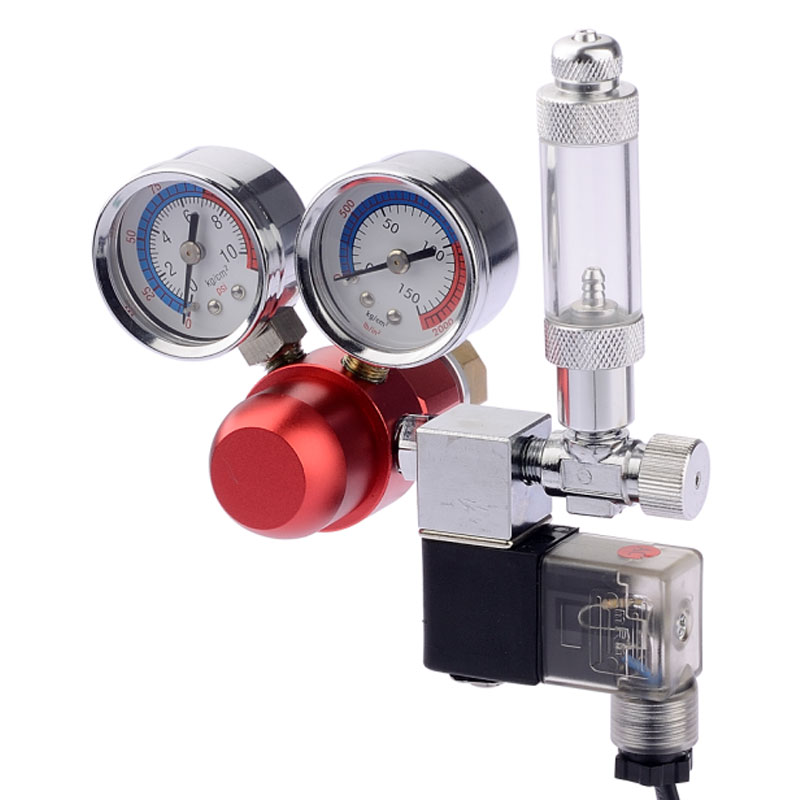
This aquarium CO2 regulator with dual pressure gauges and single bubble counter is designed specific...
See Details -
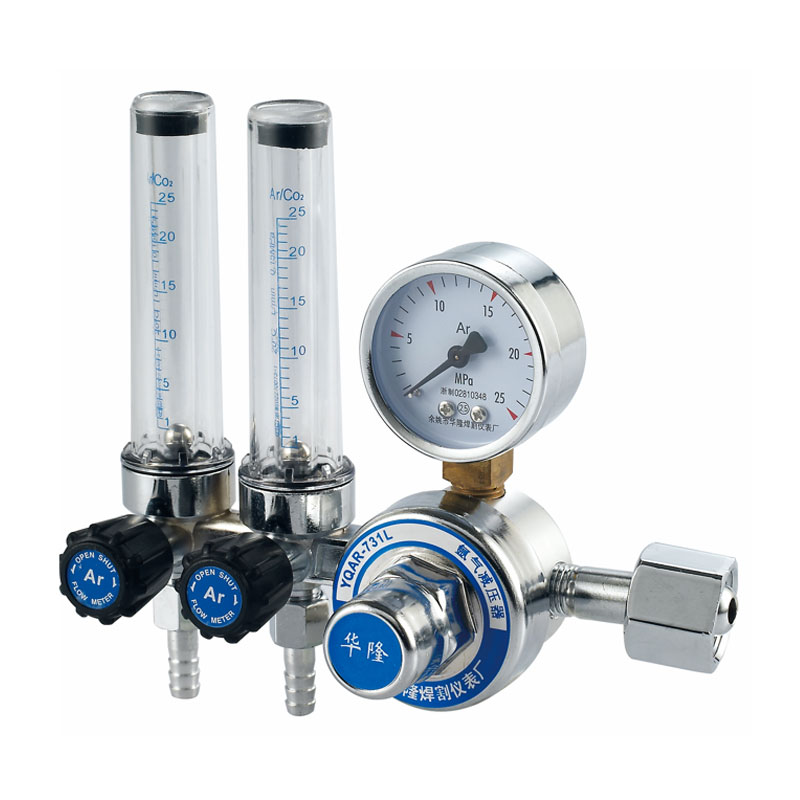
The ArR-01-2 High-Performance Argon Regulator is a pressure management device designed for precision...
See Details -
The ArR-02 Industrial Constant-Pressure Argon Regulator is a pressure management device designed for...
See Details -
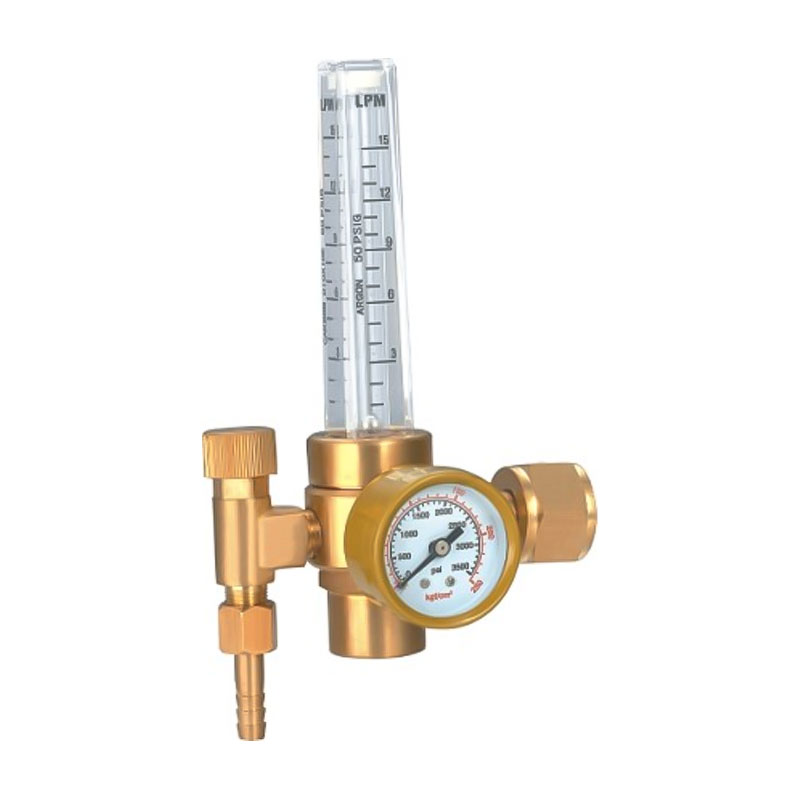
The AR-191T High-Pressure Precision Argon Regulator is a pressure regulation device specifically des...
See Details -
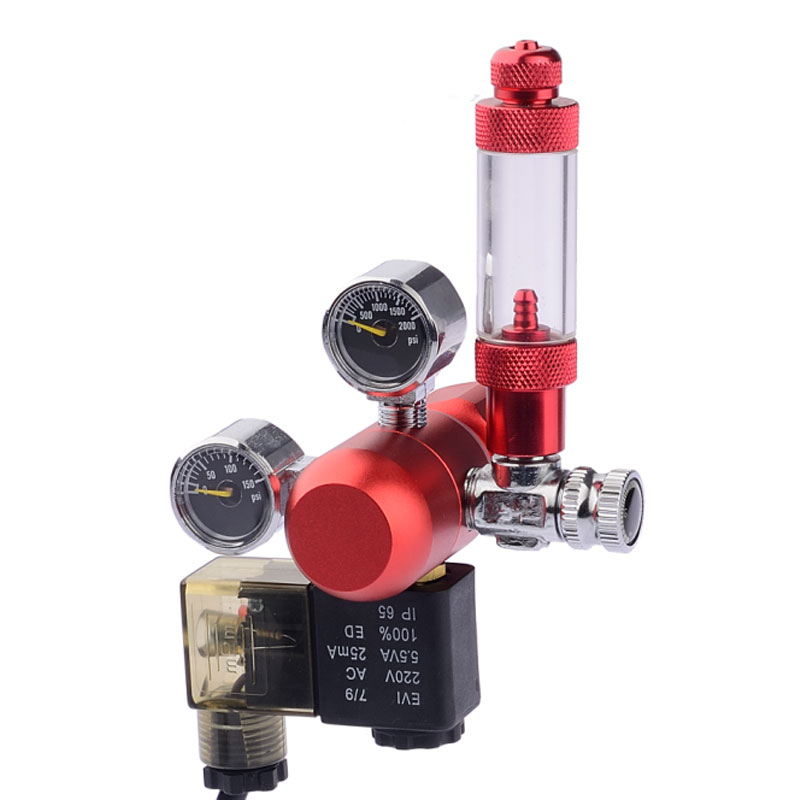
This aquarium CO2 regulator with solenoid valve and dual bubble counter is designed to provide a mor...
See Details -
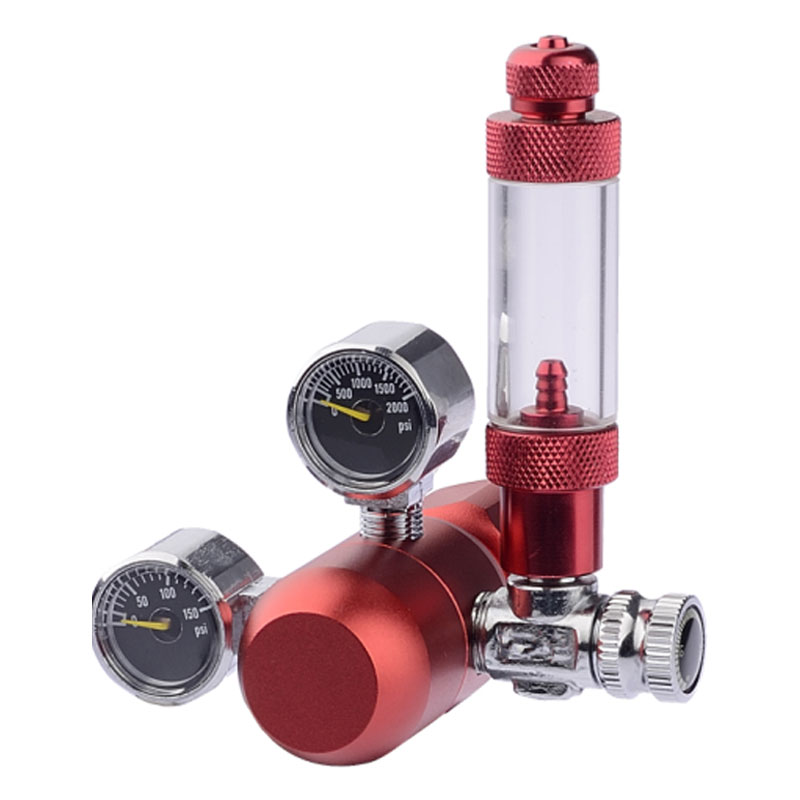
This digital CO2 regulator for aquarium systems provides stable gas support for aquatic plant landsc...
See Details -
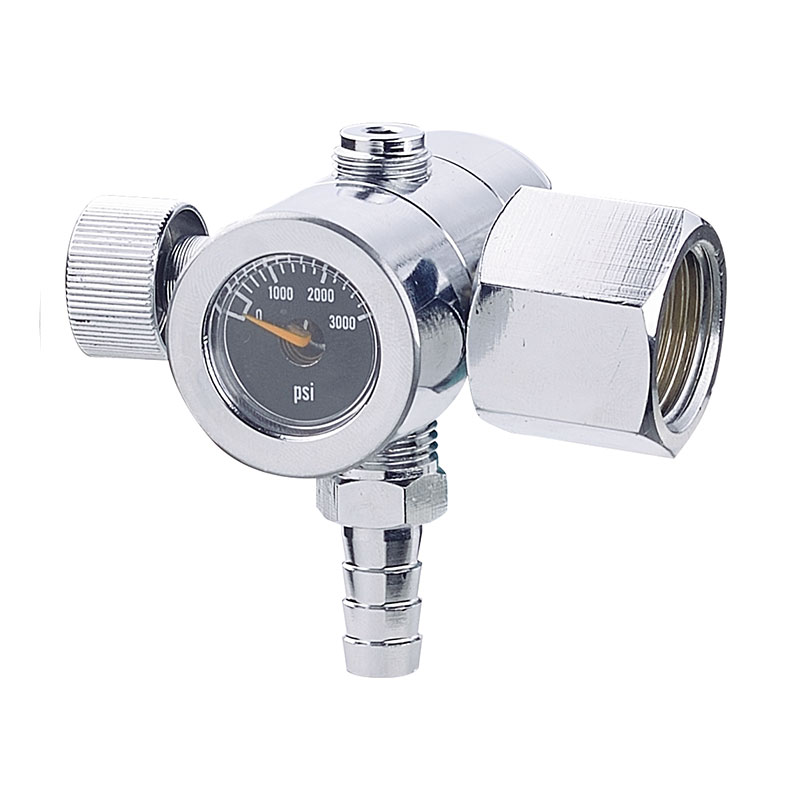
The ArR-19 Energy-Efficient Argon Regulator, with energy-saving design at its core, is suitable for ...
See Details

- PRODUCTS
- Pressure Regulator for Welding and Cutting
- Aquarium Pressure Regulator
- Beer and Beverage Pressure Regulator
- Pipeline Pressure Reducer
- CONTACT INFO
-
-
+86-180 6927 8236

-
[email protected]

-
No.1358,Tanjialing West Road, Lanjiang Street,Yuyao, 315400, Zhejiang

-
- MOBILE QR CODE

